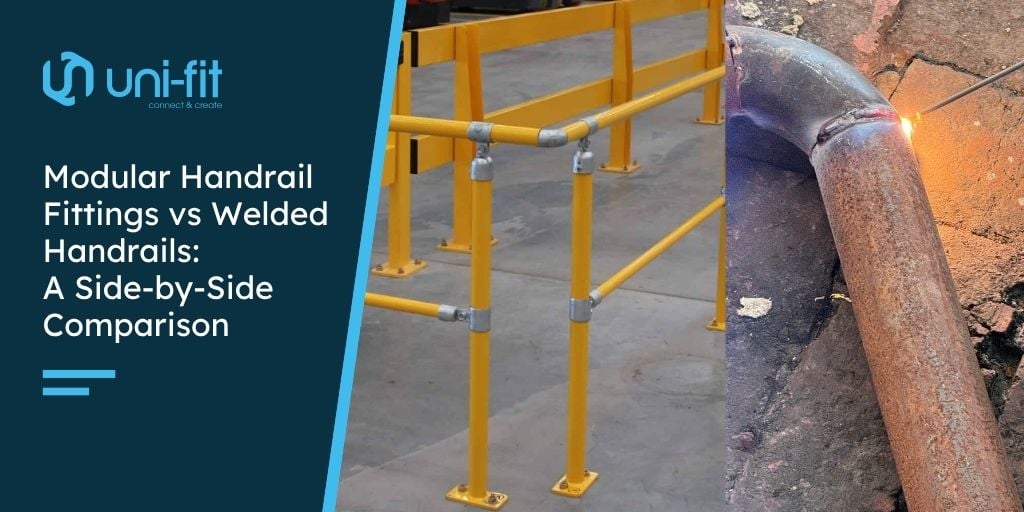
When you’re specifying or installing a handrail system, the choice between modular fittings and traditional welded construction isn’t just a preference. It affects your install time, your budget, your ability to meet AS 1657, and what happens when something needs to change six months down the track.
Here’s a straight comparison.
What We Mean by Each Approach
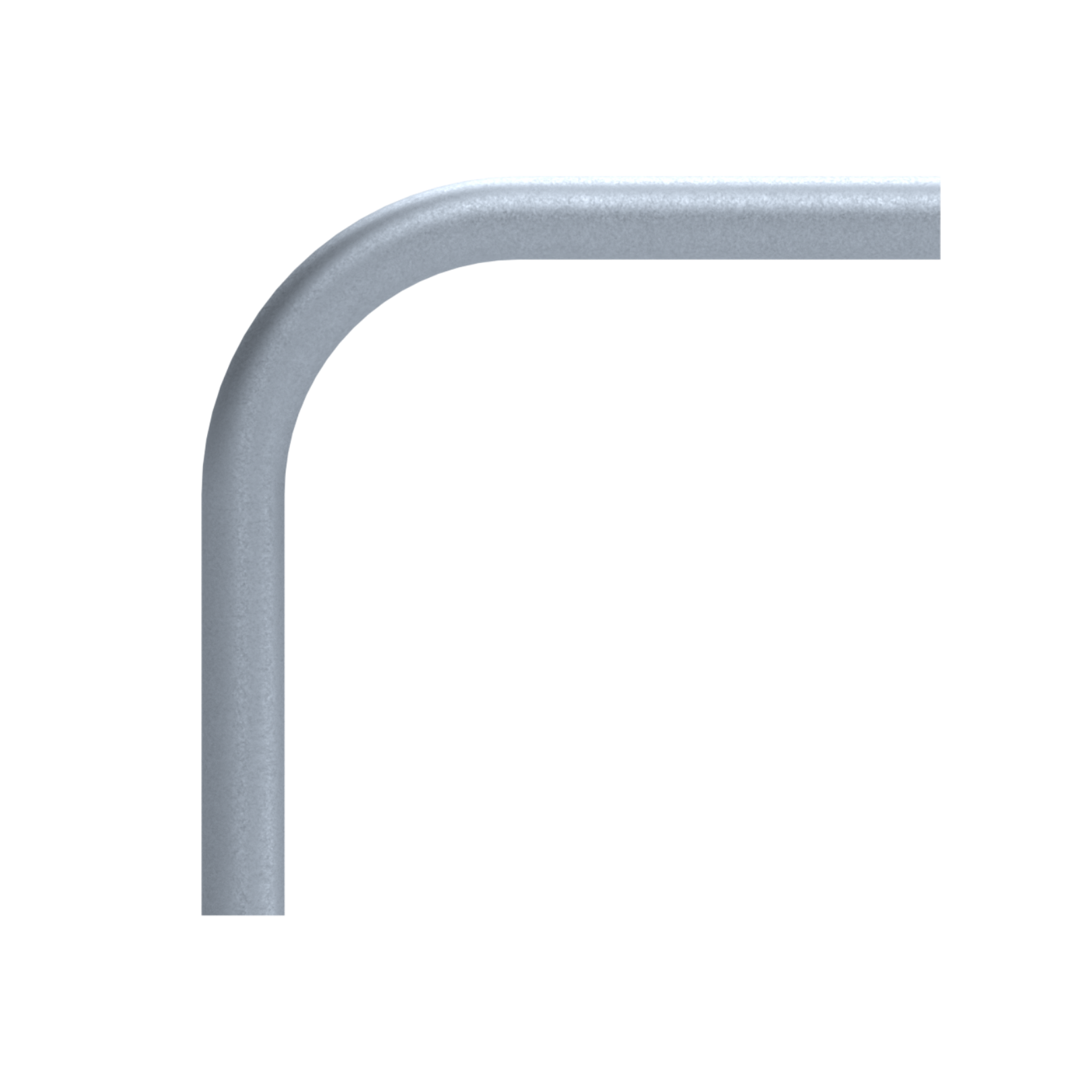
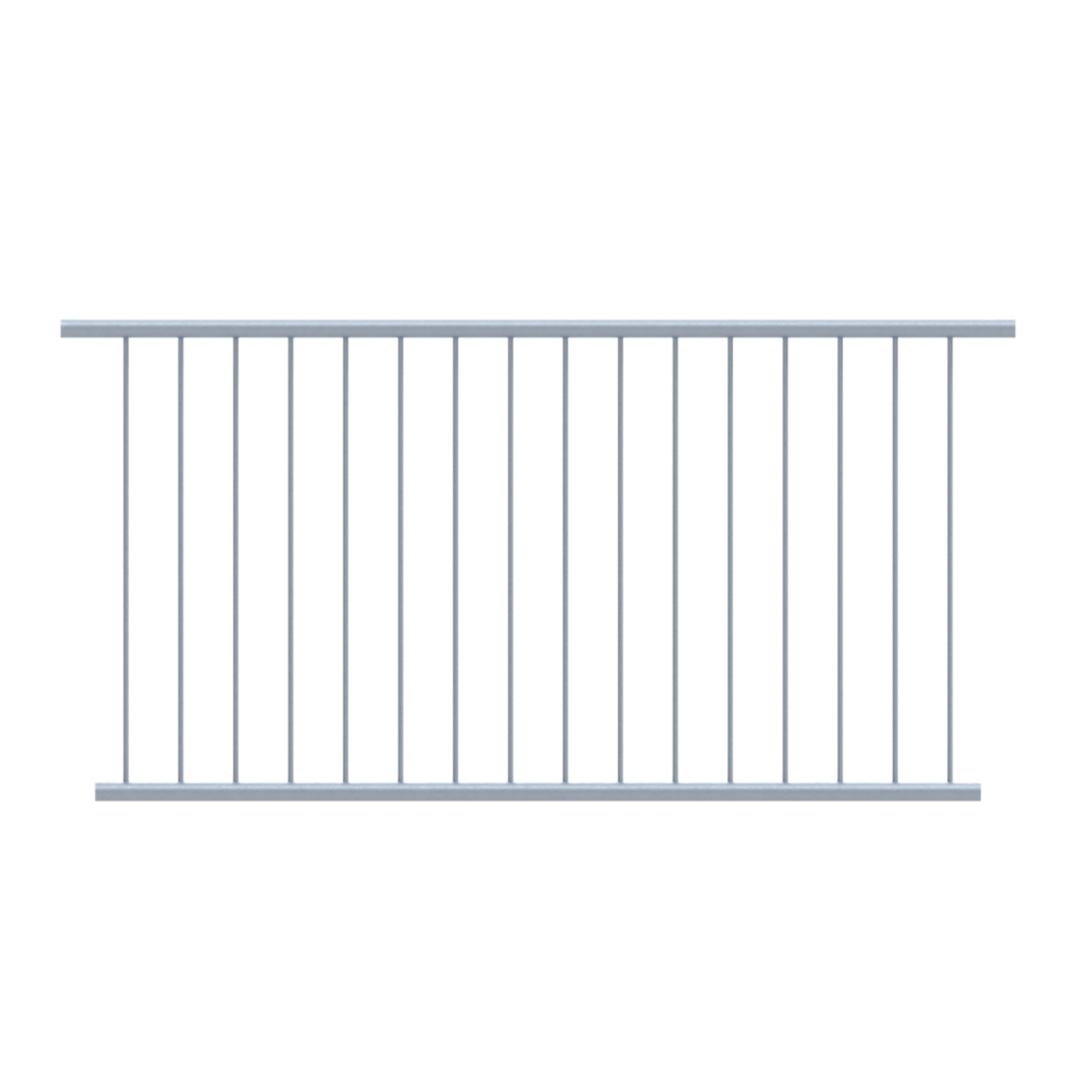
Welded handrails are fabricated off-site or on-site by a boilermaker. Pipe sections are cut, positioned, and welded together, then typically hot-dip galvanised or powder-coated after fabrication. The result is a one-piece structure built to a specific set of measurements.
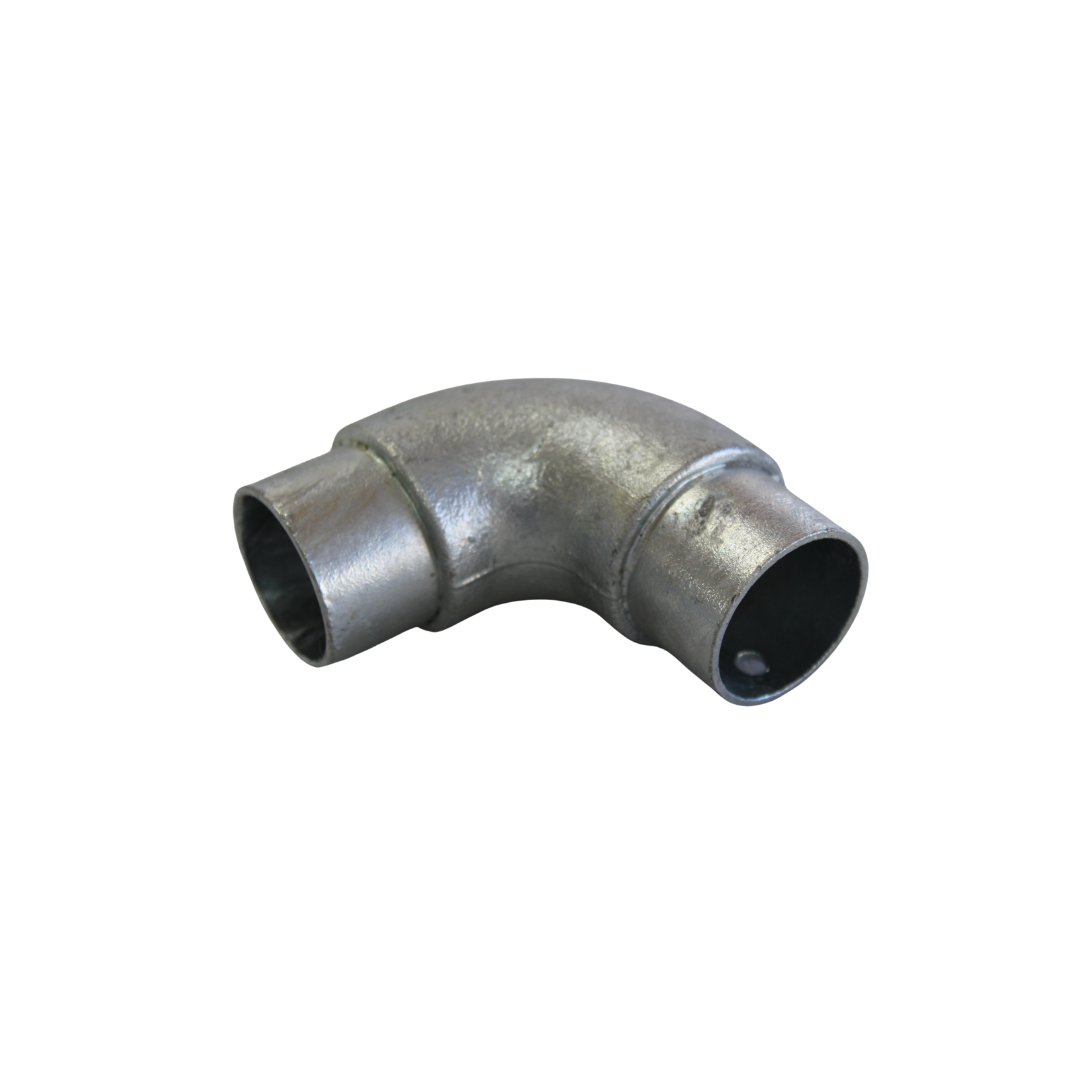
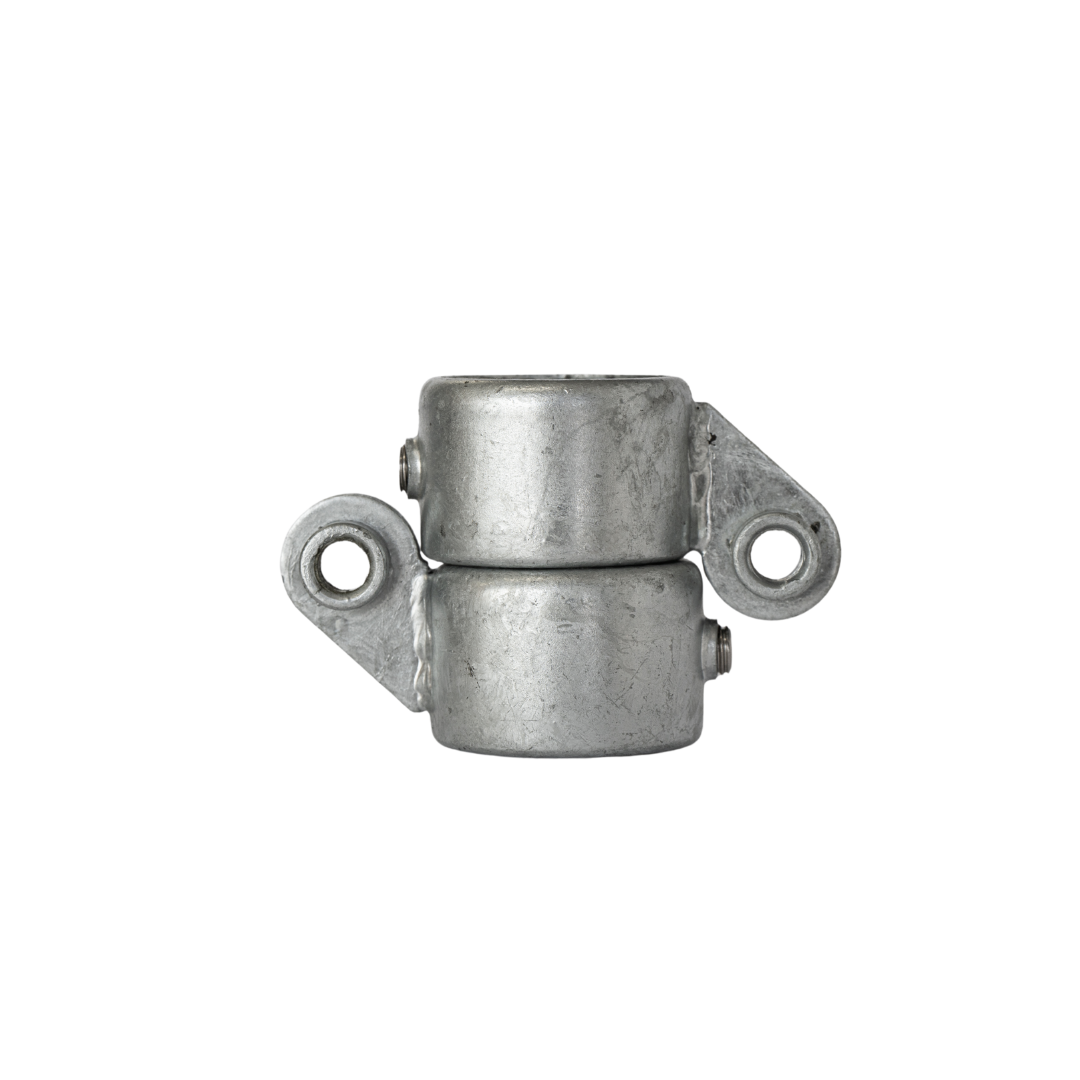
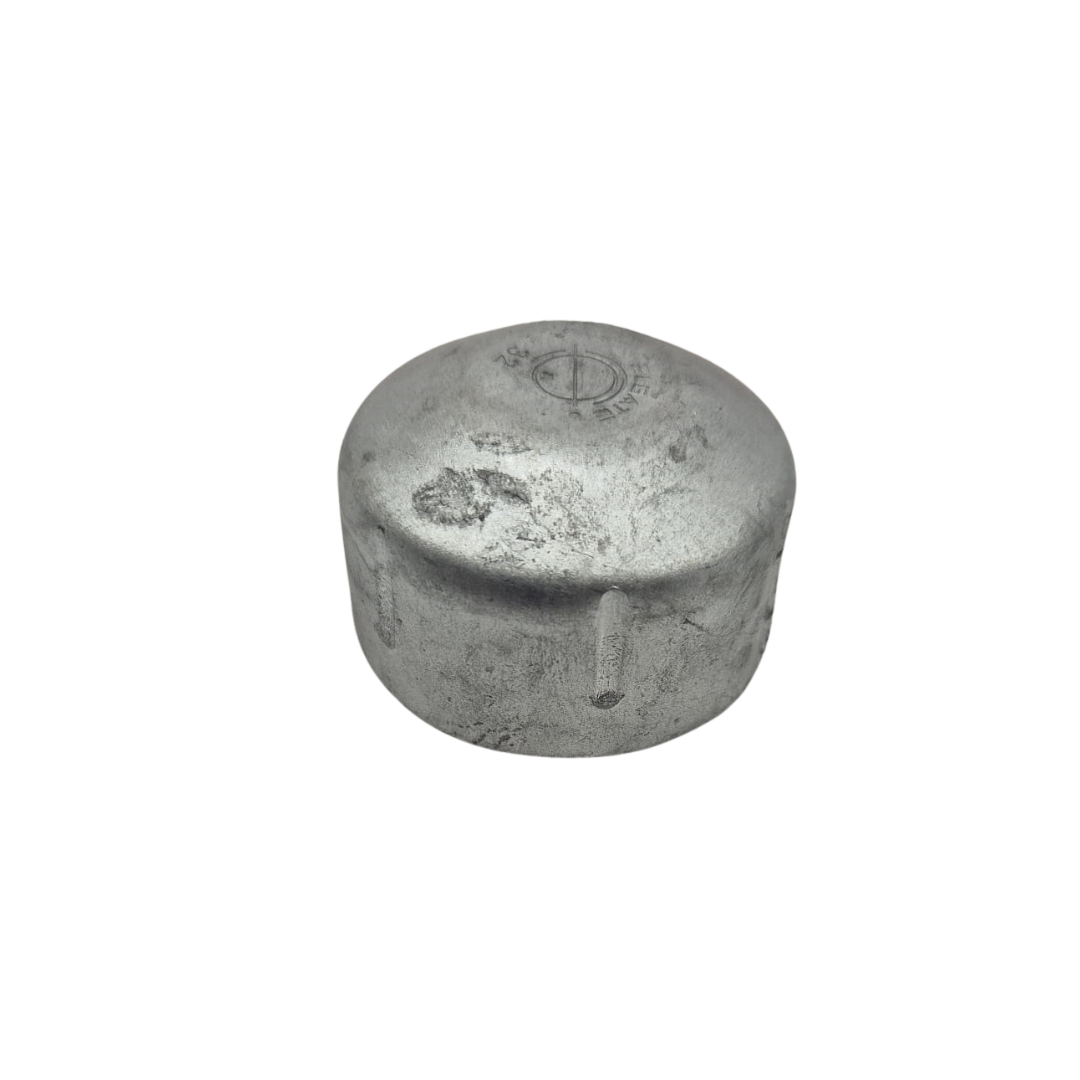
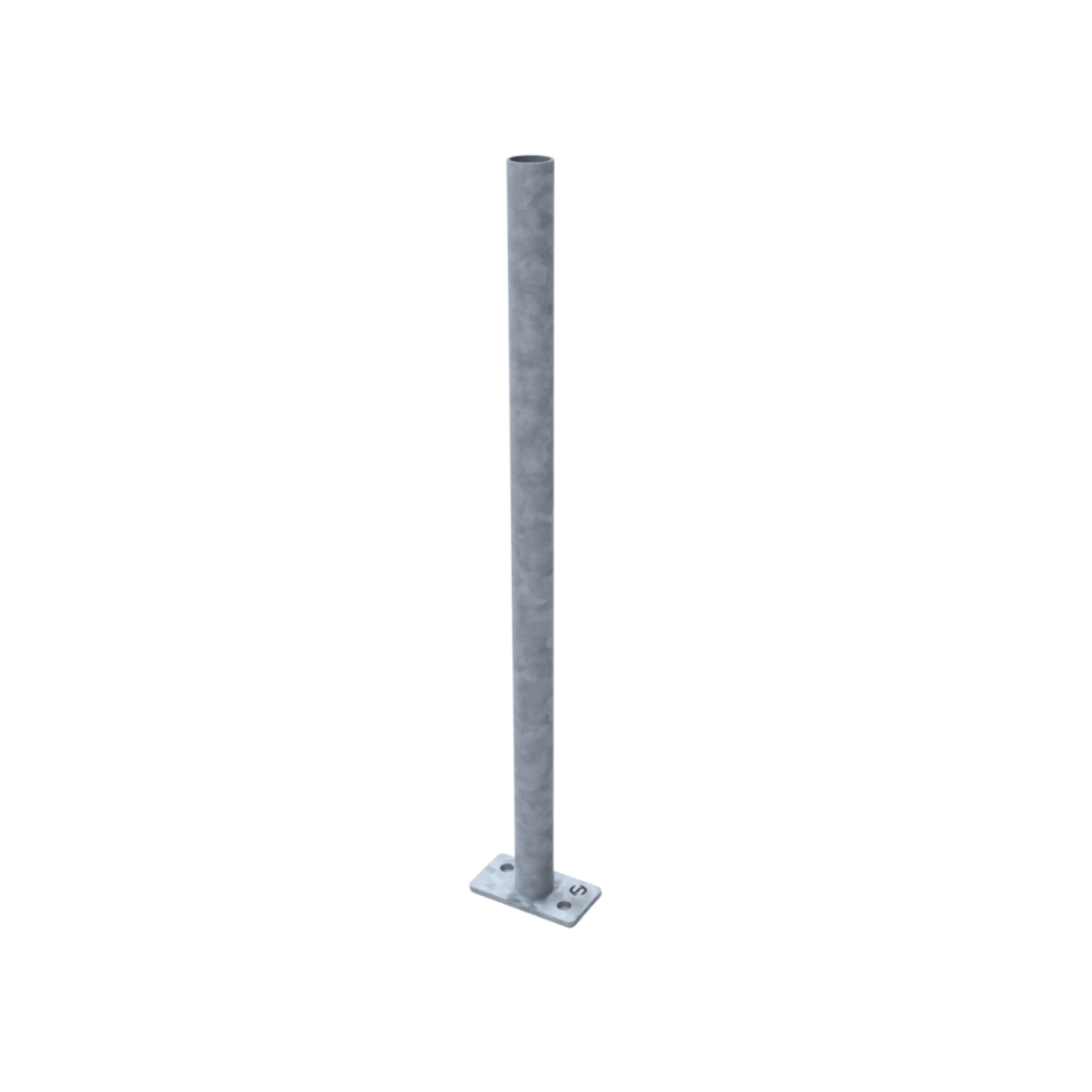
Modular handrail fittings like the Uni-Fit ring-and-cup system use pre-engineered connectors that clamp and bolt onto standard pipe. No welding required. A builder, fabricator, or maintenance team assembles the system on-site from standard components.
Comparison Table
| Features | Welded Handrails | Modular Fittings |
| Fabrication method | Cut, positioned, and welded by boilermaker | Bolted together on-site using pre-engineered connectors |
| Install time | Days to weeks (fab + transport + install) | Hours to days (on-site assembly only) |
| Tradespeople required | Boilermaker | Builder, fabricator, or maintenance team |
| Hot work permit needed | Yes | No |
| Cost profile | High upfront labour, lower material cost | Lower labour cost, components priced per fitting |
| Ability to modify | Difficult — requires cutting and re-welding | Easy — unbolt, adjust, reassemble |
| Best for | Custom aesthetics, high-volume fabrication | Industrial, commercial, infrastructure, tight timeline |
Install Time
Welded handrails require a boilermaker (or access to one), off-site fabrication time, transport, and then final installation. For a straightforward stairwell, that process might take anywhere from 3-6 weeks from order to installation. For anything with angles, changes in direction, or site-specific measurements, add more time.
With modular fittings, once you have the components and standard RHS or circular hollow section pipe, you’re assembling on-site. A typical run can be done in hours, not days. No hot work permits. No waiting in the fab shop.
Cost
Welded handrails front-load cost in labour. A boilermaker’s time is expensive, and that cost doesn’t scale down for small jobs.
Modular fittings shift the labour cost to installation, which is faster and can be done by a broader range of tradespeople. For smaller runs or awkward geometries, mezzanines, plant rooms, roof access, the saving is significant.
The hidden cost of welded is changed. If measurements are wrong, or the scope changes, you’re back to the fab shop. With modular, you adjust on-site.
Compliance with AS1657
Both approaches can meet AS1657 (Fixed Platforms, Walkways, Stairways and Ladders: Design, Construction and Installation). What matters is the finished system, not the construction method.
Uni-Fit components are designed and tested to comply with AS 1657 requirements. The system handles the standard rail heights (900mm on stairways, 1000mm on platforms), mid-rail requirements, and kickplate provisions, all within the modular format.
Worth noting: some engineers and certifiers are more familiar with welded systems. If you’re on a project with a detailed design specification, check early whether modular is listed as an accepted method or needs to be engineered.
Flexibility and Future Changes
Welded systems are permanent. If a layout changes, equipment is repositioned, or a door gets added where a rail section used to be, you’re cutting and re-welding, or replacing the whole run. Once the re-weld is finished you cannot take this section back to the Galvanising plant, but you must Gal spray out of a aerosol can which can look different and have a shorter longevity.
Modular systems unbolt. A section can be removed, extended, or reconfigured without special tools or a boilermaker on-site. For industrial sites where layouts evolve, that flexibility has real value.
Where Each Approach Makes Sense
Welded is often the right choice when:
- You need a fully custom aesthetic (architectural handrails, stainless feature rails)
- The project spec calls for it specifically
- You have a dedicated fabrication shop and the volume justifies it.
Modular fittings are usually the better call when:
- Speed of installation matters
- The site is operational and hot work is restricted
- Scope changes are likely
- Maintenance access means rails will need to be moved over time
- The job is small-to-medium and doesn’t justify full fab shop involvement.
The Short Version
Welded handrails are a known quantity. They work, they look clean, and there’s a deep pool of tradespeople who can build them. But they’re slow, they’re expensive to change, and they require specialist labour.
Modular fittings get the job done faster, with fewer constraints, and they’re easier to modify. For industrial, commercial, and infrastructure applications where compliance is the requirement and not aesthetics, they’re worth serious consideration.
Want to see the Uni-Fit system in more detail?
Download the product catalogue or request a quote.