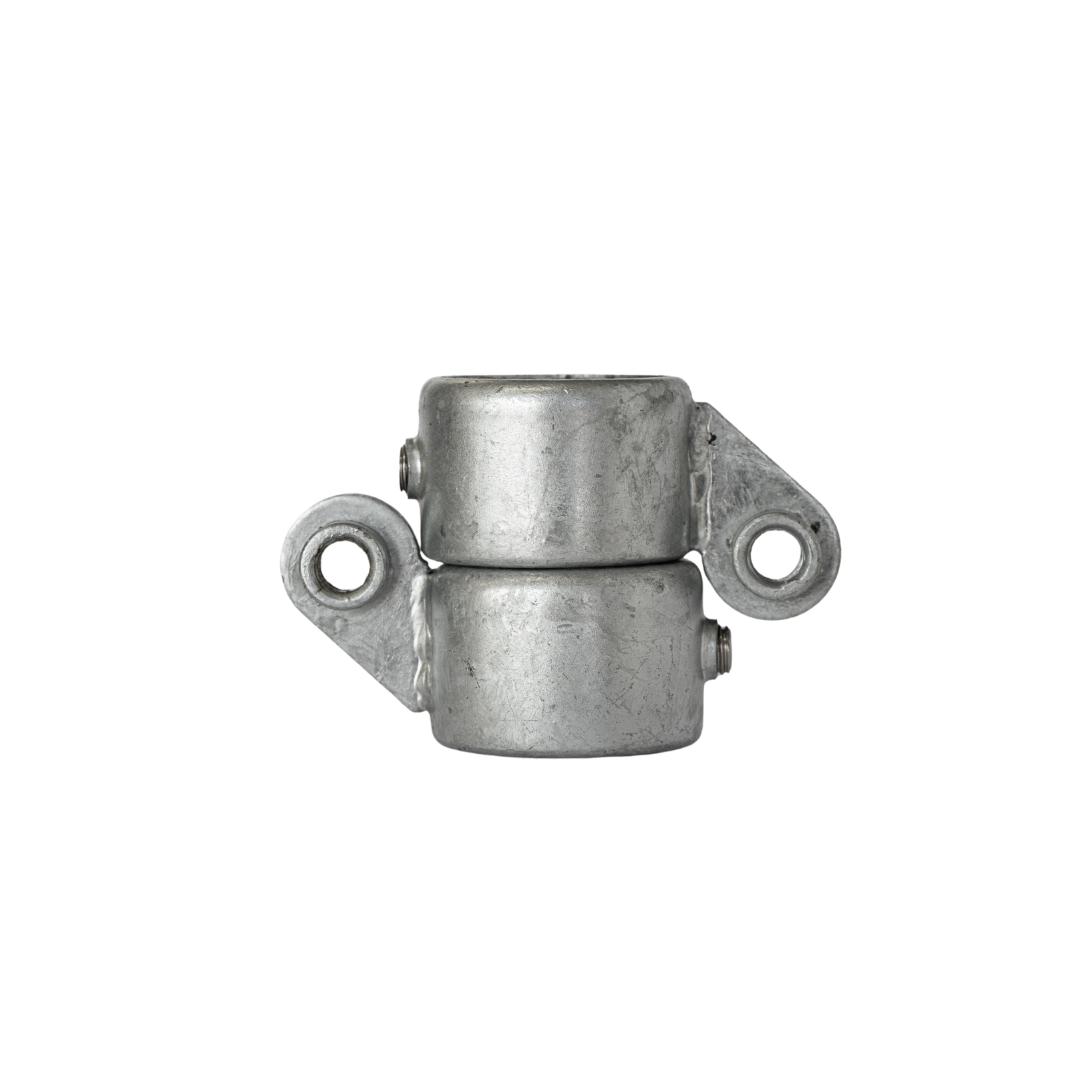
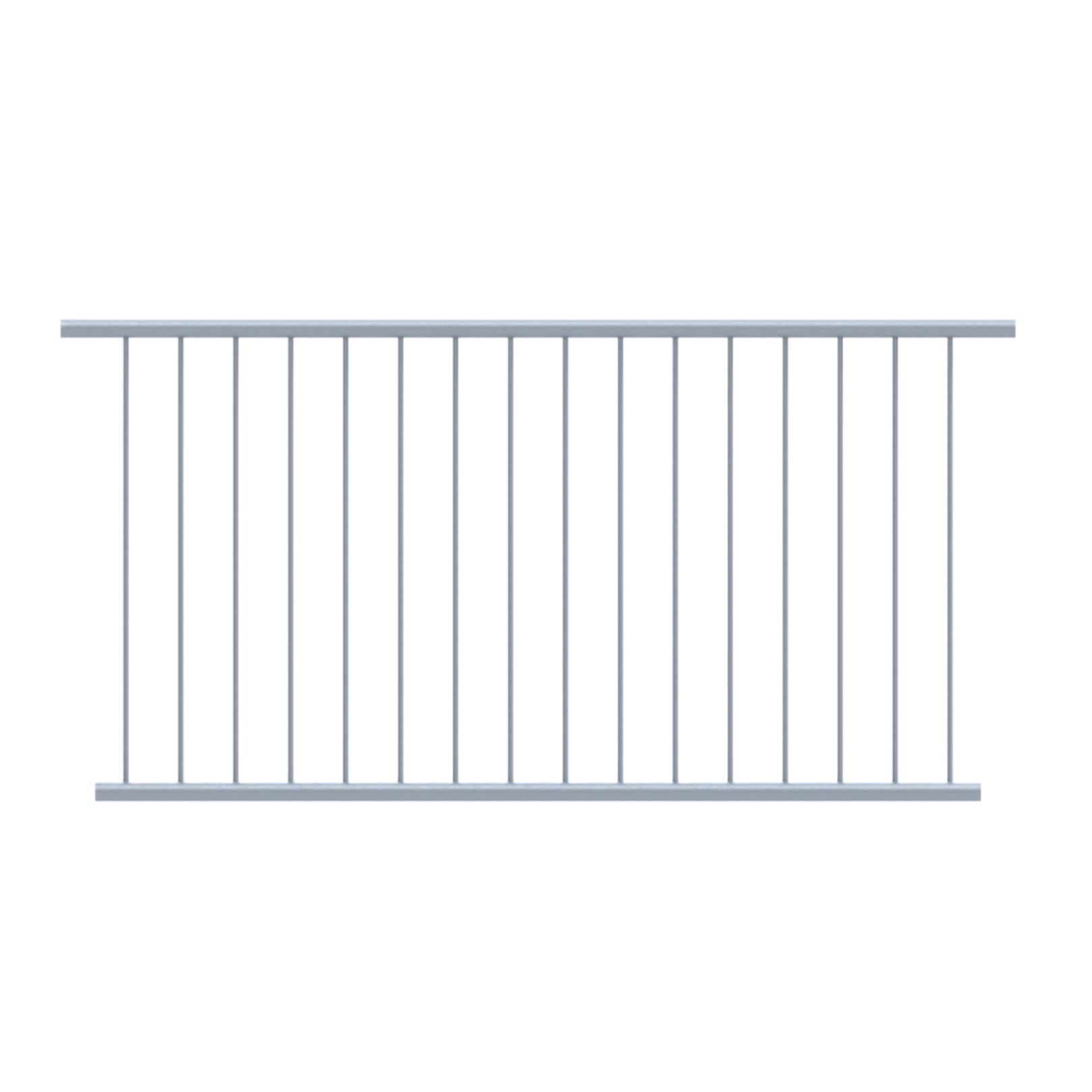
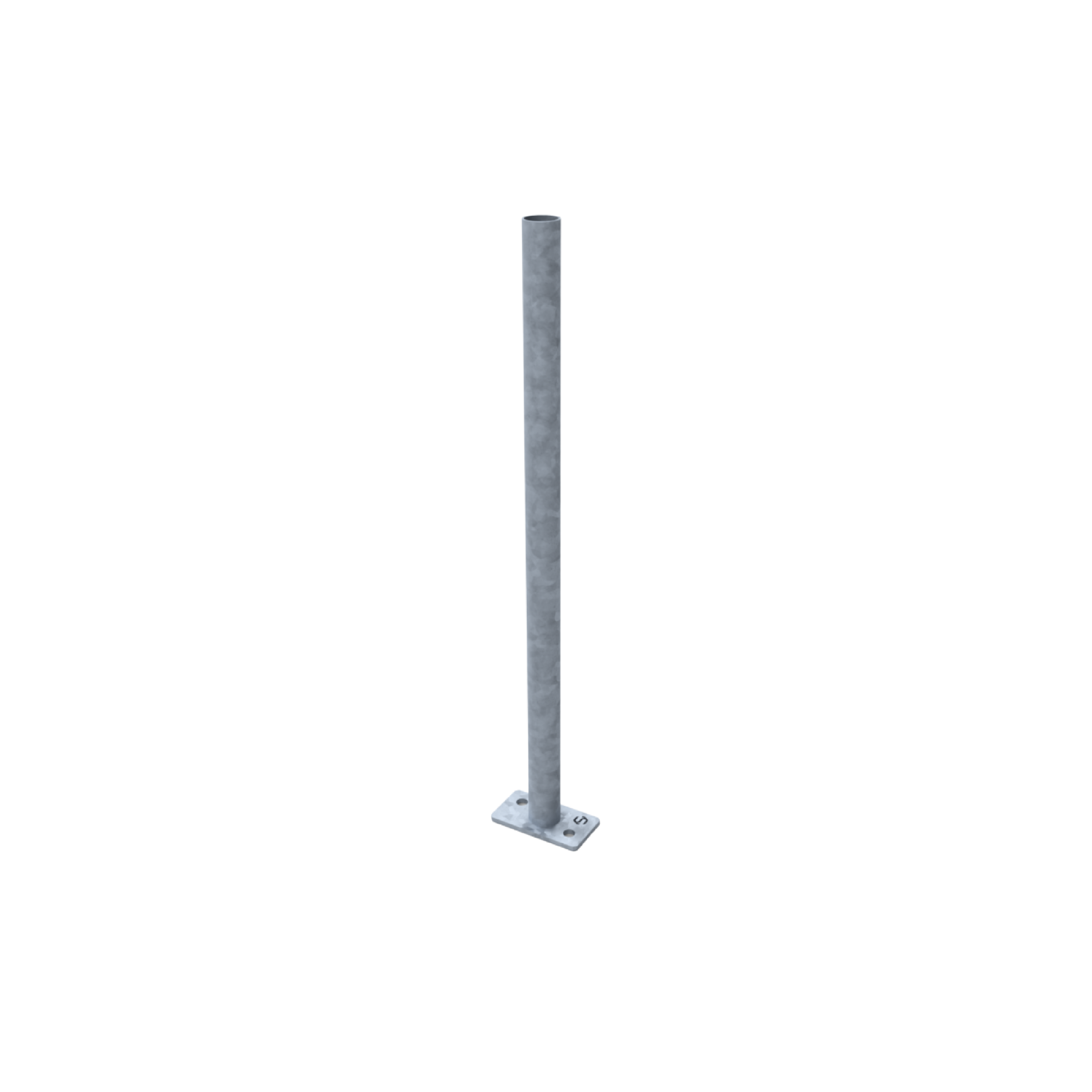

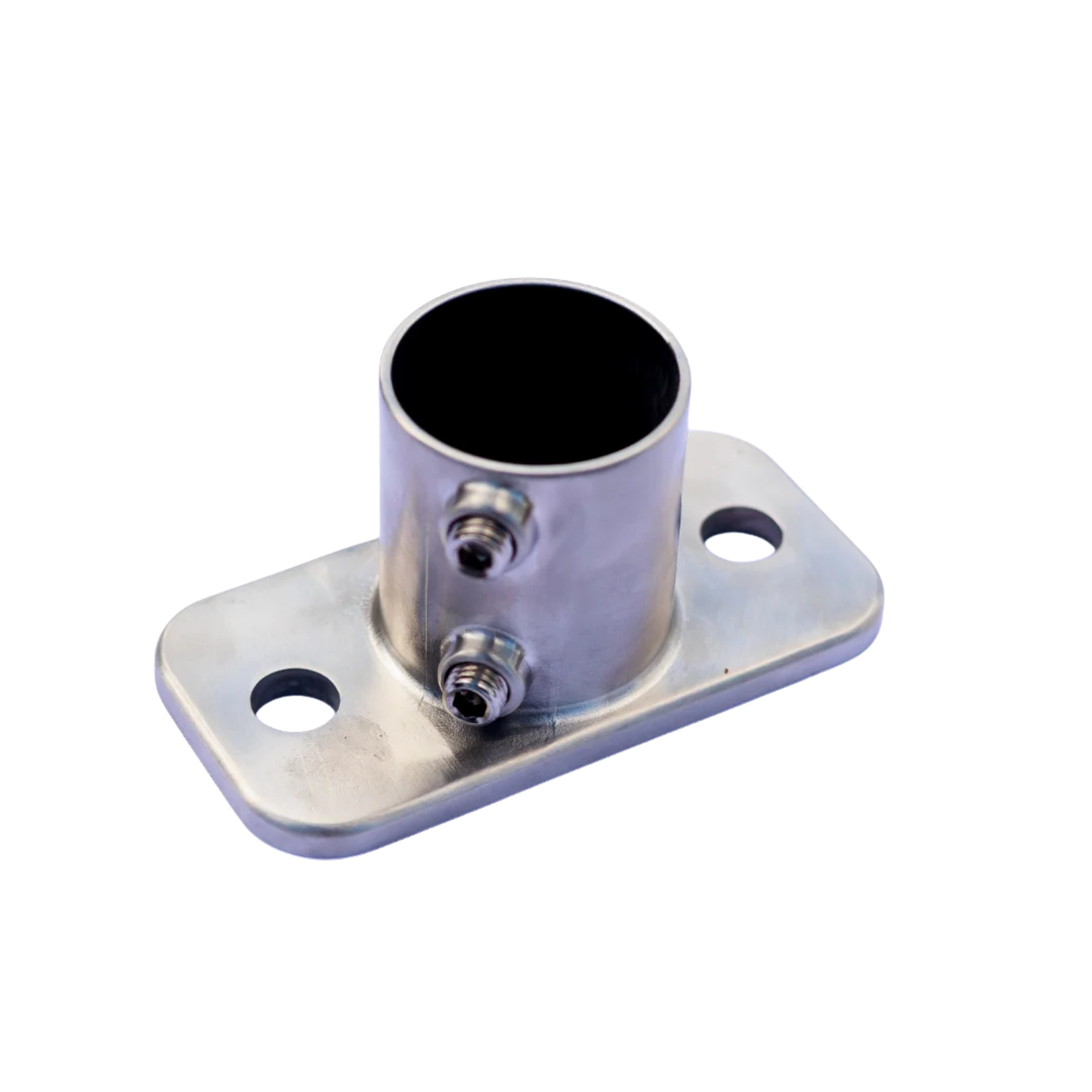
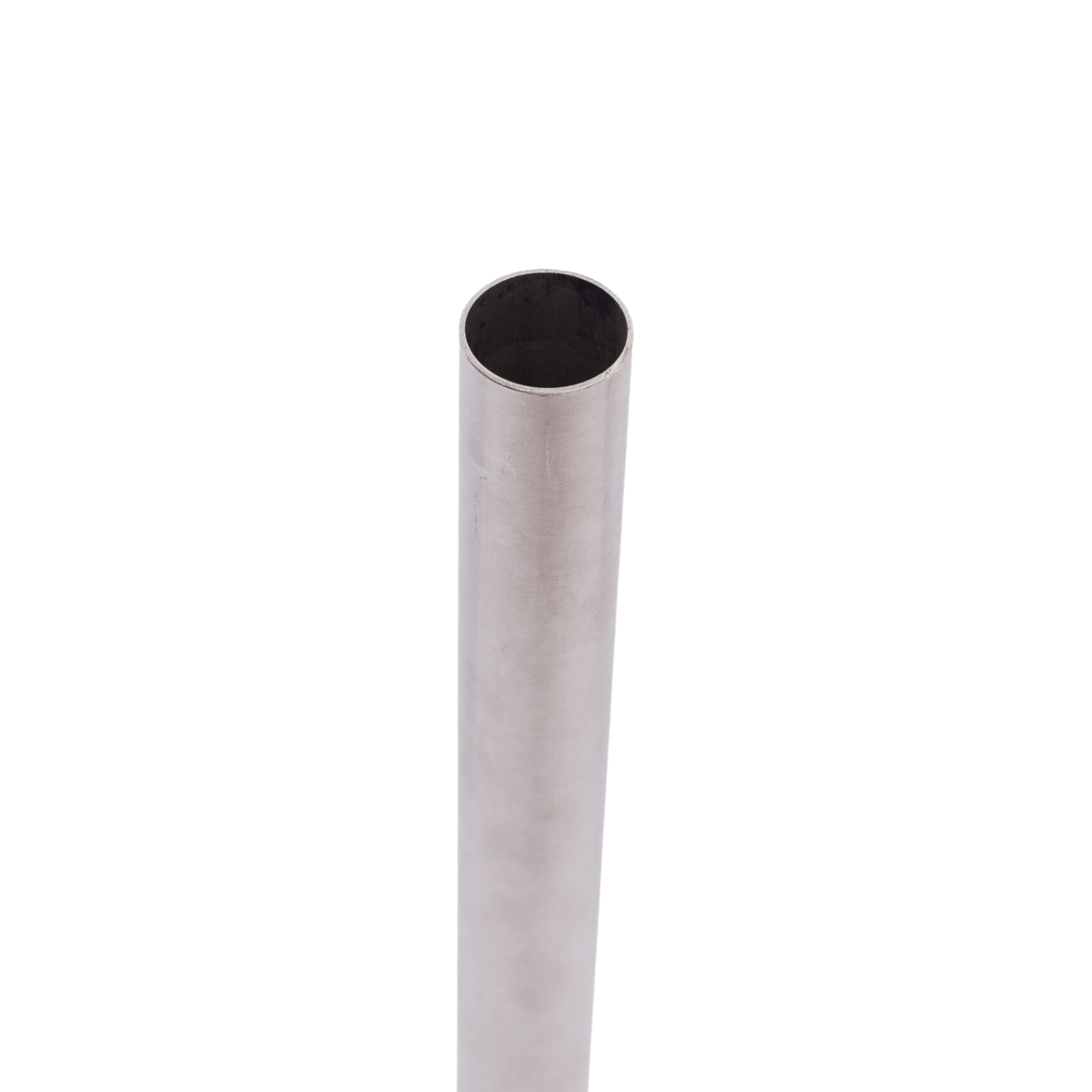
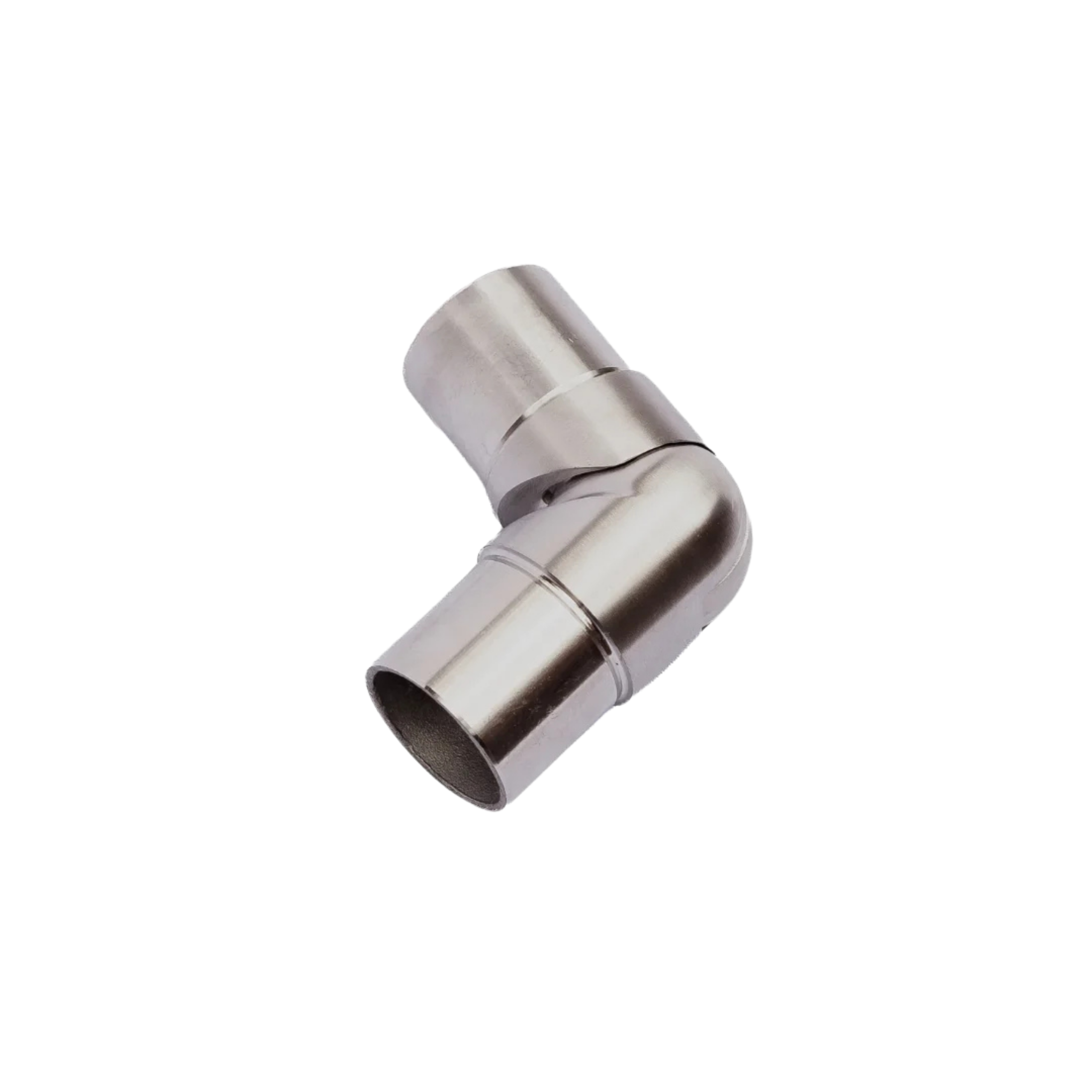
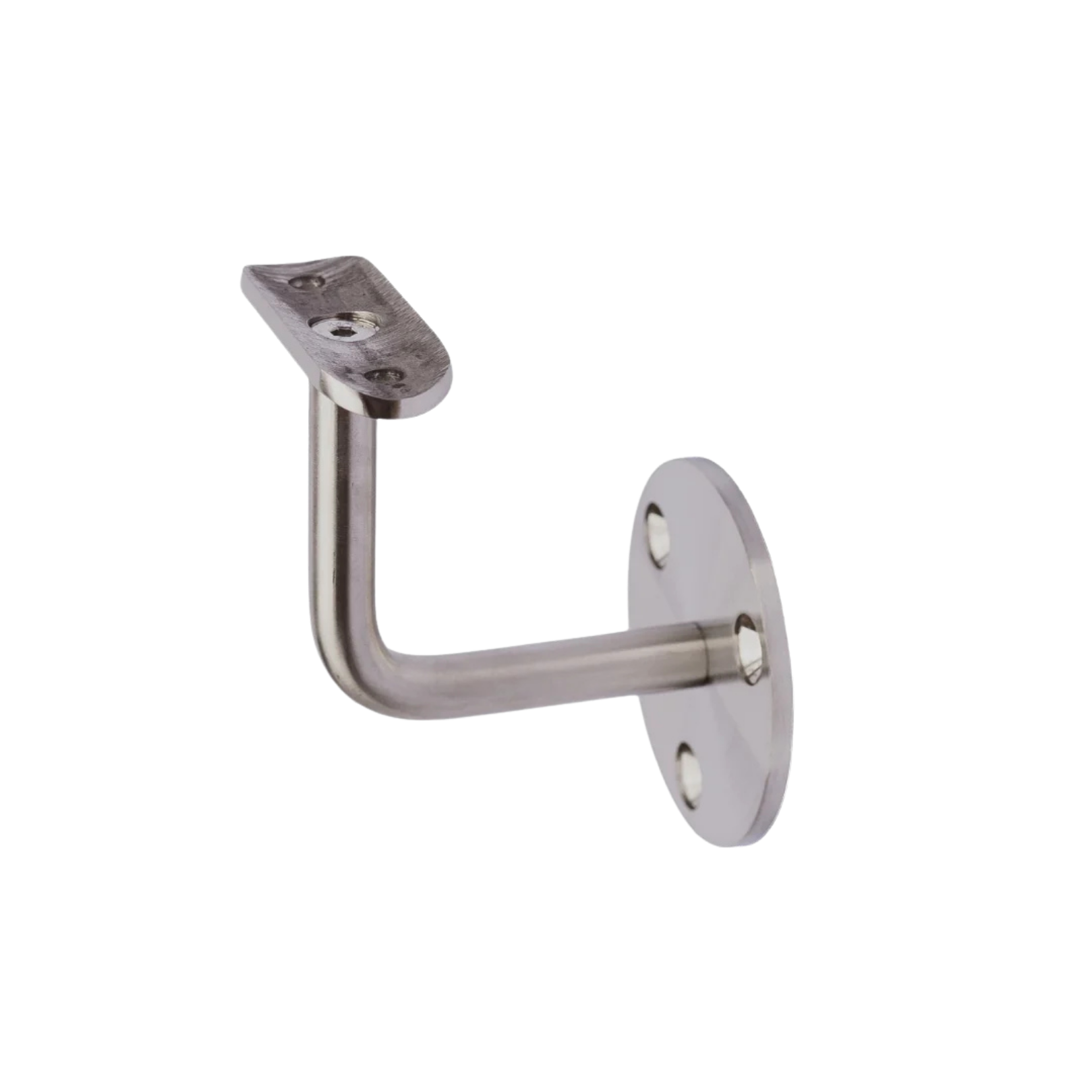
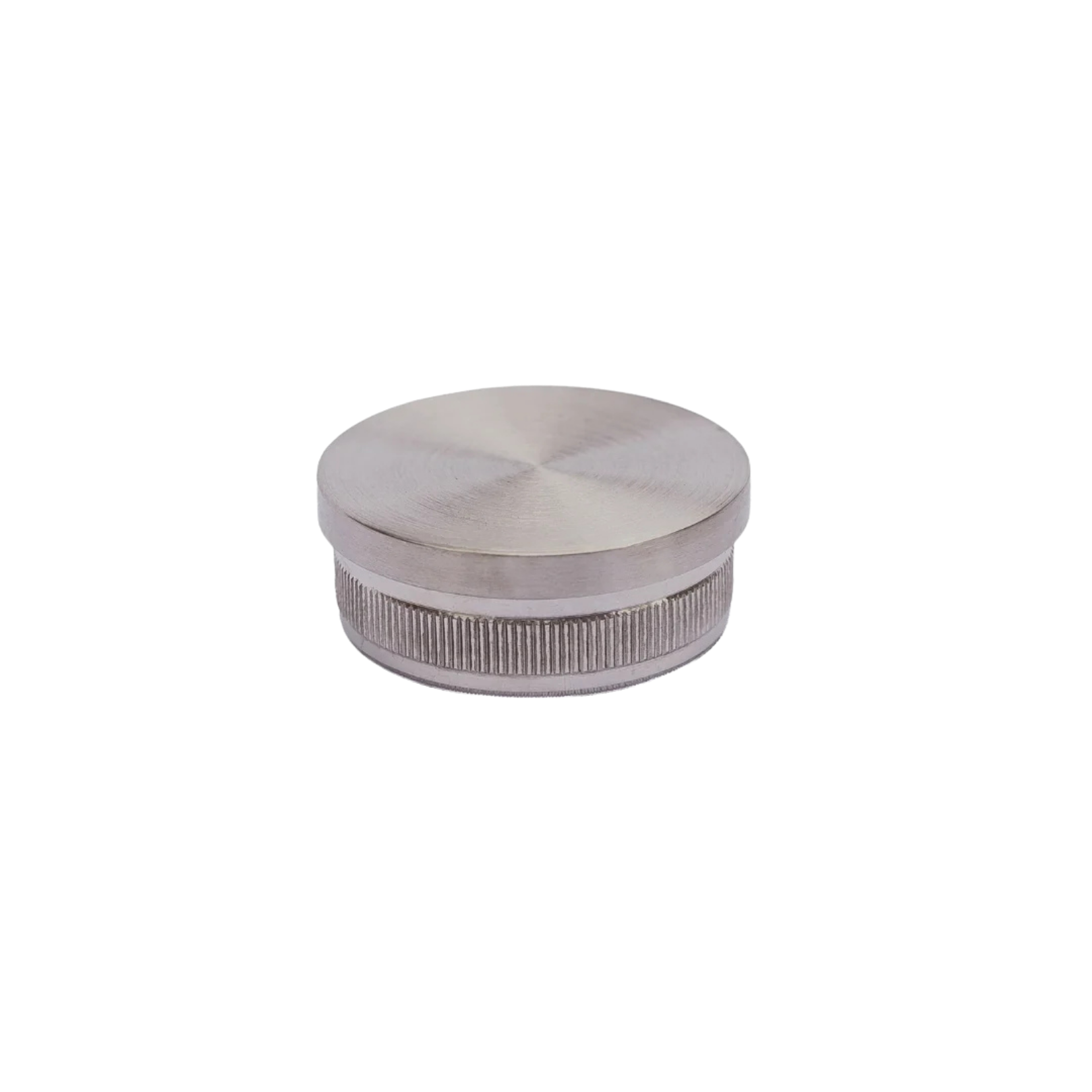
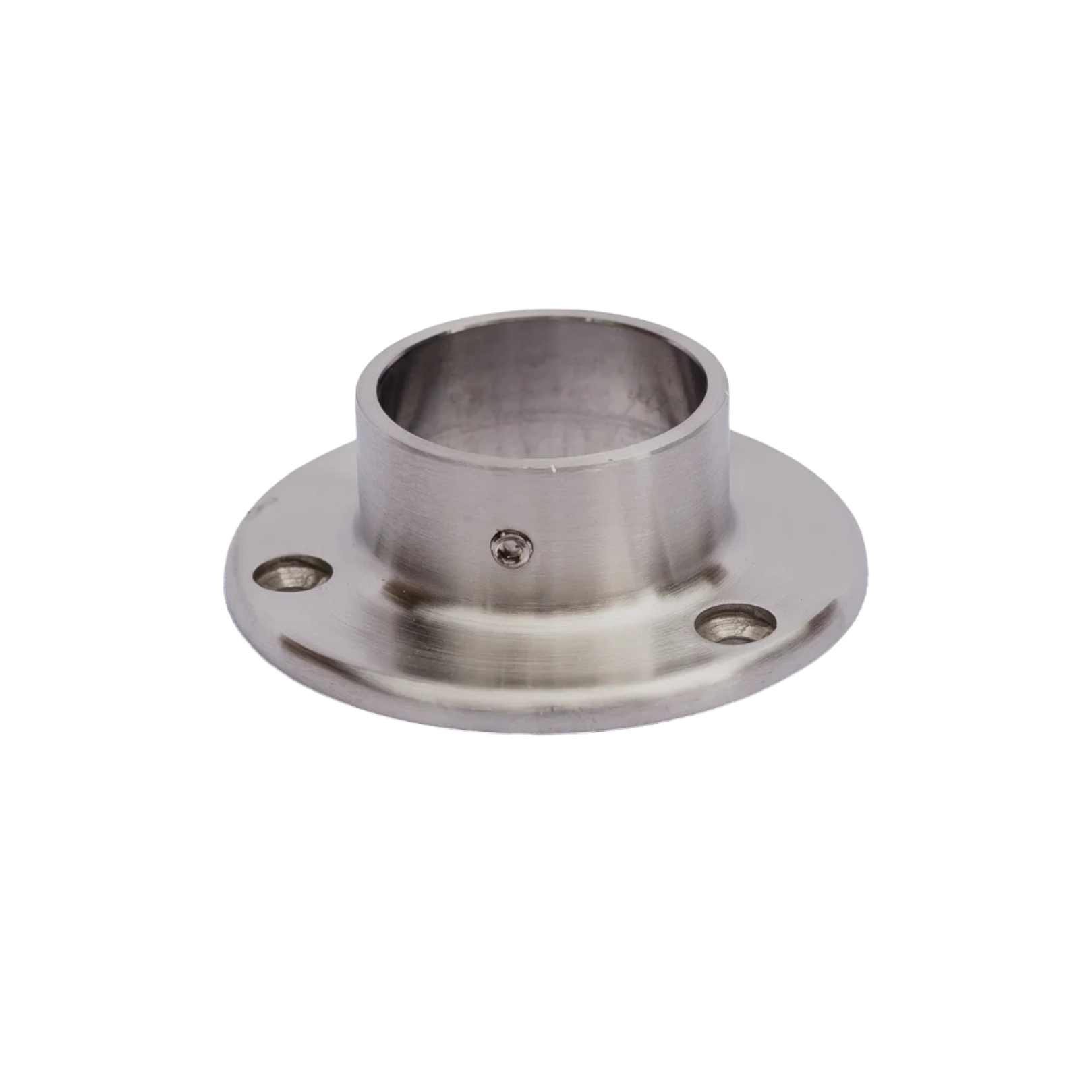
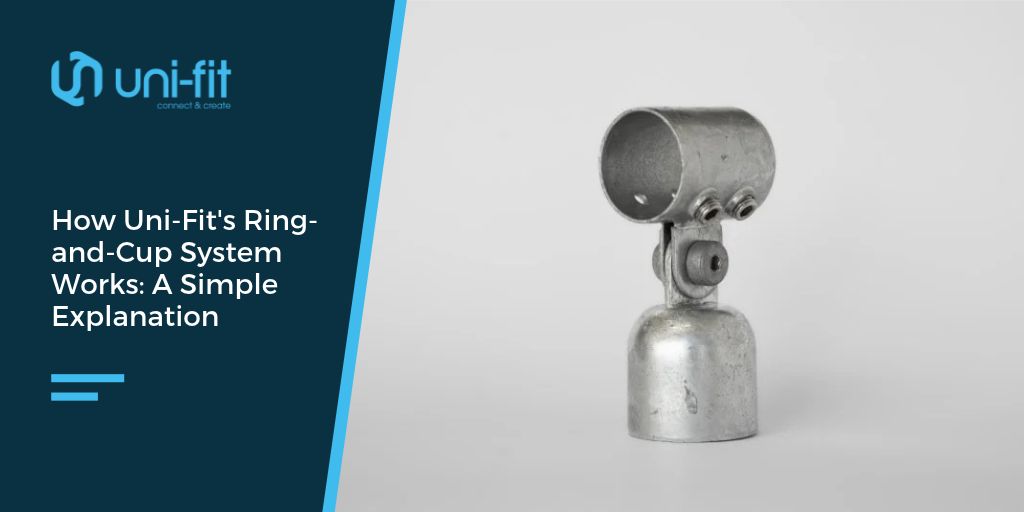
Uni-Fit’s ring-and-cup system joins the handrail pipe without welding. A ring clamps around the post, a cup fits over the end of the rail, and one M12x20 bolt pulls the two together. The ring pivots on that bolt, so the same pair of fittings handles a level run, a ramp or a stair.
That connection sits at the centre of the Uni-Fit modular handrail system. It’s the reason an installer can build a compliant run with an Allen key instead of a welder, a generator and a hot work permit. Here’s what each part does, how the angle adjustment works, and what you need on site.
What is the ring-and-cup system?
The ring-and-cup system is a two-part mechanical joint that connects a handrail pipe to a post using a bolt instead of a weld. The ring carries the load and sets the angle. The cup holds the rail. Together they replace the cut, fit, weld and grind sequence that a fabricated handrail needs at every junction.
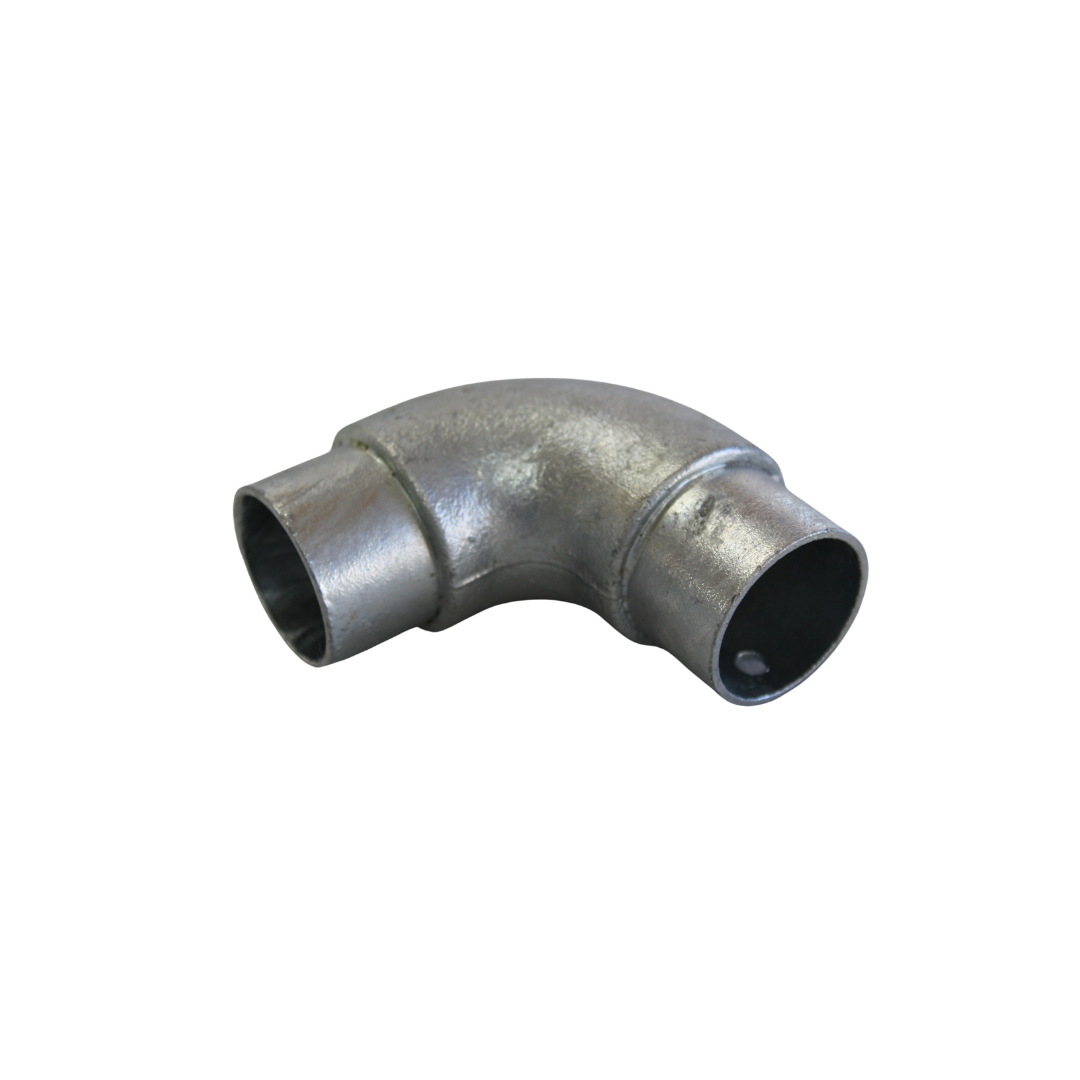
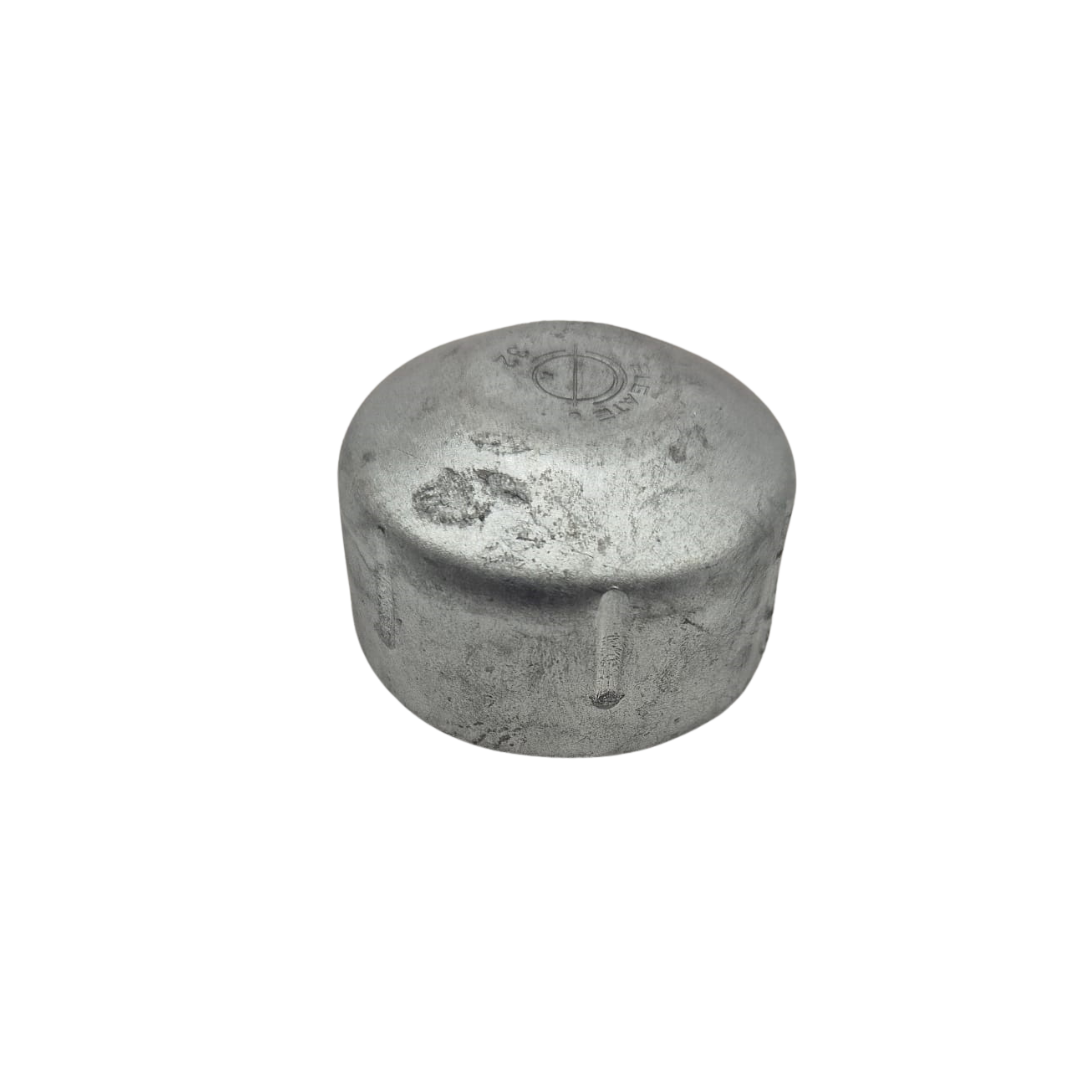
The cup is the simpler of the two. It fits over the end of a post or a length of rail pipe and locks on with a 6mm grub screw. On top of the cup sits a lug with a hole in it.
The ring does the clamping. It wraps the post, carries its own grub screws, and has one or more bolt lugs depending on how many rails meet at that point. A one way ring takes a single rail. A two way fixed ring takes two. A two way split ring opens into two pieces, so it can be fitted mid-post on a run that’s already standing.
The supplied M12x20 bolt passes through the ring lug and the cup lug and pulls them together. That’s the joint. One bolt, one hex key, no heat.
How does a ring-and-cup joint go together?
A ring-and-cup joint goes together in six steps and takes a couple of minutes once you’ve done a few. You set the post, slide the ring to rail height, cap the rail with a cup, bolt the two lugs together, set the angle, then torque everything down. No measuring of mitre angles, no cutting to suit.
- Set the post. Fix the base plate to the slab, or drop the post into the ground, and get it plumb.
- Slide the ring down the post to the rail height you need. Leave the grub screws loose so it can still move.
- Fit a cup over the end of the rail. Nip the grub screw so it won’t fall off while you work.
- Bolt the cup to the ring. The M12x20 bolt goes through both lugs and takes a 10mm Allen key.
- Set the angle, then torque the bolt to 25Nm. On a level run the rail sits square. On a stair or ramp you swing the rail to the pitch of the flight before you tighten.
- Lock the grub screws to 55Nm. That’s what stops the ring creeping down the post and the cup rotating on the rail.
The order matters more than the tools. Everything stays loose until the geometry is right, which is why a run can be adjusted on site rather than sent back to the shop.
How does the angle adjustment work?
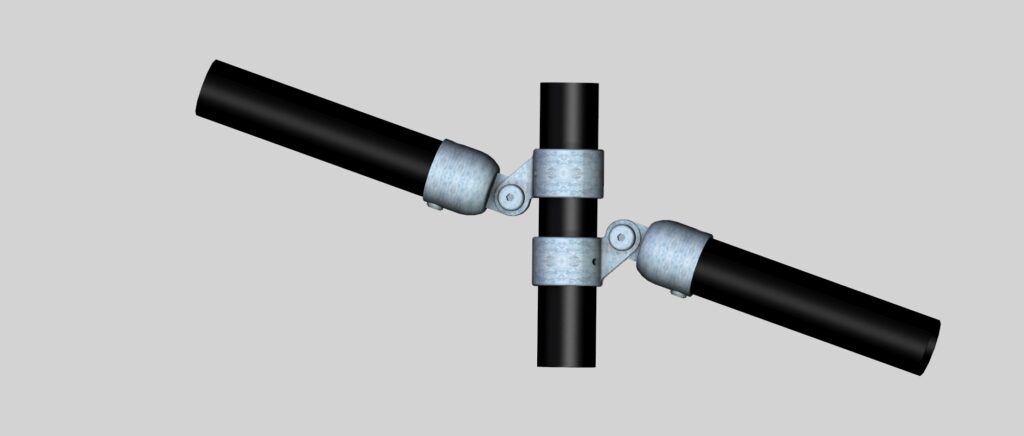
The cup pivots on the bolt that holds it to the ring, which lets a rail sit at any angle up to 60 degrees off square. You set the rake by eye against the stair stringer or the ramp fall, then tighten. The fitting holds whatever angle you leave it at, so one part number covers level runs, ramps and stair flights.
This is the part that saves the most time. On a welded rail, every change in pitch is a new cut and a new weld, and the angles have to be known before fabrication starts. A raked site that was measured wrong means the rail comes back off the truck and goes back to the shop.
With a one way ring and a cup, the angle is set during installation by the person who can see the ground. Nothing is ordered to suit the slope and nothing is cut on site.
The same ring also works in two orientations. Mounted vertically it clamps a post and takes a rail. Mounted horizontally on a top rail it takes a dropper or a mid-rail. That’s one fitting doing two jobs, which is why a Uni-Fit parts list is usually shorter than the equivalent fitting system.
Which fittings use the ring and cup?
Four fittings make up the ring-and-cup family, and between them they cover almost every junction on a handrail run. The cup is constant. What changes is the ring behind it, which decides how many rails meet at that point and whether the ring can be fitted to a post that’s already up.
| Fitting | Code | What it does | Sizes |
| Cup with bolt | UFCUP | Fits over the end of a post or rail and carries the M12x20 bolt and a 6mm grub screw | 25, 32, 40, 50, 80NB |
| One way ring | UFR1 | Clamps a post or a top rail and takes a single cup at any angle to 60 degrees | 25, 32, 40, 50, 80NB |
| Two way fixed ring | UFR2 | Takes two cups off one post for a mid-rail or knee-rail connection | 32, 40, 50, 80NB |
| Two way split ring | UFSR2P | Two pieces that bolt around a standing post and rotate 360 degrees, for curved paths and stair mid-rails | 25, 32, 40, 50NB |
Pick the size of the pipe, not the project. A 40NB cup fits a 40NB pipe. If you’re not sure what size the run calls for, the steel pipe sizes guide sets out what each nominal bore measures in practice.
One thing worth knowing about the split ring: it comes apart. That means a mid-rail can be added to a finished run, or a damaged section replaced, without lifting a post out of the ground. On a welded rail the same job is a grinder and a hot work permit.
Where does the ring-and-cup system get used?
The system earns its keep anywhere welding on site is slow, restricted or impossible. That covers national parks and walking tracks, live hospitals and schools, cold storage rooms, warehouses with stock on the floor, and any job where a hot work permit would hold up the program.
At Blue Mountains National Park, the brief was a compliant handrail on difficult terrain with no welding and no heavy equipment. The run went in with a single Allen key. Gear carried in on foot is a real constraint on that sort of site, and it rules out a generator and a welder before anyone discusses cost.
The same logic applies indoors. A hospital corridor or a school walkway can’t be shut down for sparks and grinding dust. Bolted fittings go in around the people using the building.
What do you need on site?
A 10mm Allen key, a hex key for the grub screws and a torque wrench will build the whole run. There’s no cutting of fittings, no welding, no hot work permit and no power at the post. The pipe still needs cutting to length, so a cold saw or a pipe cutter stays on the list.
Torque settings are the one thing not to eyeball. The cup-to-ring bolt goes to 25Nm and the grub screws to 55Nm. Under-tighten and the ring walks down the post under load. Over-tighten and you’re relying on a deformed thread.
Everything in the galvanised range is hot-dip galvanised steel, so the joint doesn’t need painting or touching up where it’s cut, because it isn’t cut. On coastal and marine jobs the Uni-Fit Elite range runs the same connection logic in 316 stainless.
On compliance, the fittings are built to suit AS 1657, and 32NB and 40NB pipe sit inside the 30mm to 65mm graspable diameter the standard sets for circular handrails. Rail heights, mid-rail gaps and load requirements are a longer conversation, and the AS 1657 compliance guide covers them properly.
Frequently asked questions
Does any part of the system need welding?
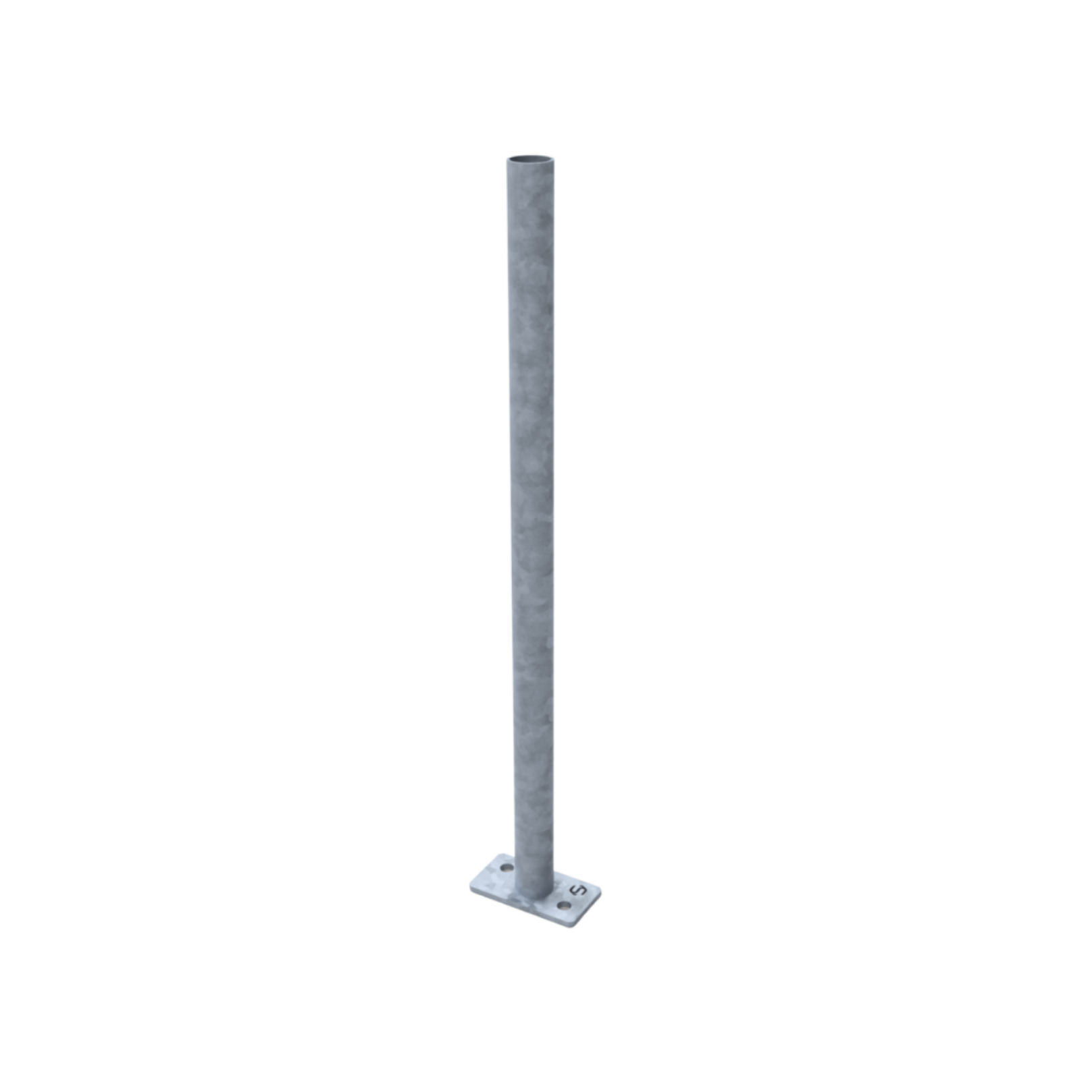
The rail connections don’t. Base plates anchor to the slab with no welding on posts up to 2.4 metres. Above that, the base plate should be welded to the post for added strength, and the baseplate with a welded cup arrives from the factory already welded.
Can a ring-and-cup joint be taken apart?
Yes. Back off the grub screws, undo the M12 bolt, and the joint separates. Nothing was cut or ground to make it, so the fittings and the pipe can be reused elsewhere. That’s why reconfigurable and temporary installations tend to use bolted fittings.
What pipe sizes do the fittings suit?
Cups and one way rings cover 25NB, 32NB, 40NB, 50NB and 80NB. Two way fixed rings run 32NB to 80NB, and split rings run 25NB to 50NB. The fitting size matches the nominal bore of the pipe it sits on, not the project.
Will the fittings corrode outdoors?
The galvanised range is hot-dip galvanised steel and handles general outdoor and industrial exposure. Because nothing is cut or welded on site, the coating stays unbroken at every joint. For coastal, pool and marine sites, the 316 stainless Elite range is the better call.
Do the joints loosen over time?
Not when they’re torqued properly. Grub screws at 55Nm bite into the pipe and stop the ring sliding down the post, and the M12 bolt at 25Nm clamps the cup to the ring. Loose joints nearly always trace back to grub screws nipped by hand.