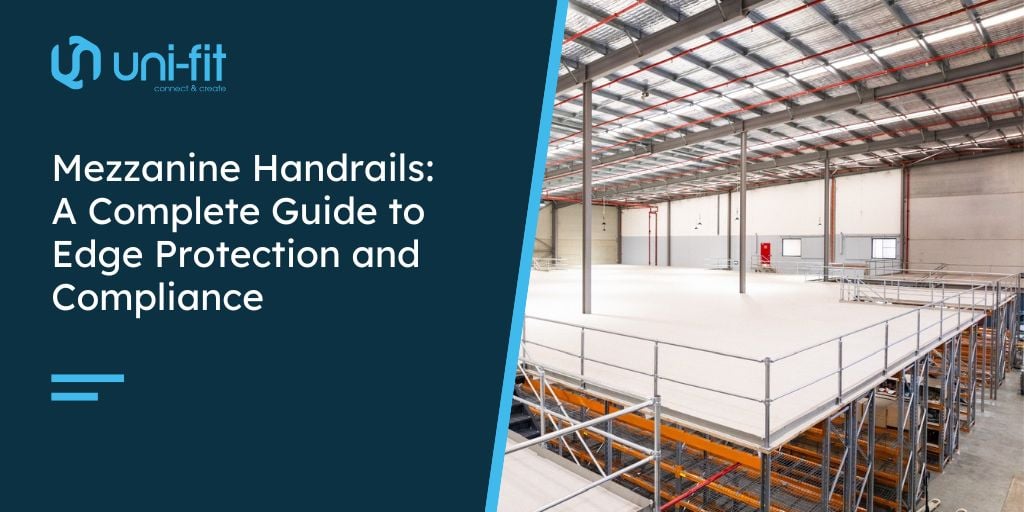
If you’re setting up a mezzanine floor in a warehouse, factory or commercial facility, handrails aren’t something you get to skip. Under Australian Standard AS 1657, edge protection is a legal requirement once your platform is more than 300mm off the ground. That’s a low threshold, and most mezzanines sit several metres up.
This guide covers what the standard requires, what a compliant system looks like, and what to watch out for when you’re specifying or inspecting one.
When handrails are required
AS 1657 is the standard that governs mezzanines, walkways, stairways and service platforms in industrial and commercial settings. It applies to areas used by workers and authorised personnel, not the general public.
The rule is straightforward: handrails are required on any exposed edge where the drop exceeds 300mm. For a mezzanine floor, that means the full perimeter, plus any stairway landings, floor openings, pallet drop zones and access hatches.
Height requirements
This is the part building inspectors check first.
Under AS 1657, the top rail must sit between 900mm and 1100mm above the floor surface or stair nosing. That height must stay consistent across the full run, through corners, along ramps and across landings. Dips or gaps in height are a compliance failure.
A single top rail isn’t enough. You also need:
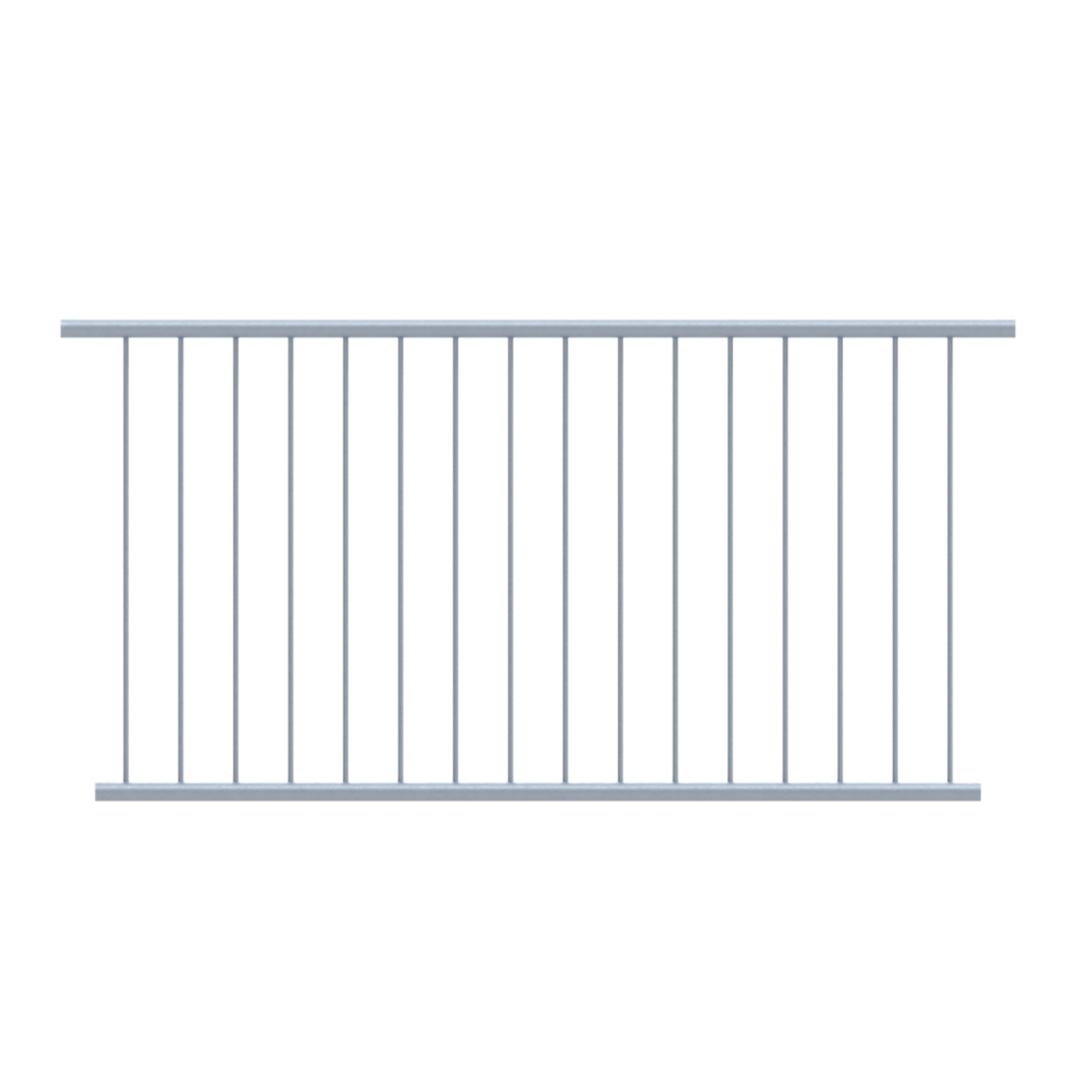
Mid rail (knee rail): Minimum 560mm from the floor. This closes the gap below the top rail that someone could slip through.
Toe board: Required wherever tools, equipment or materials could fall from the platform edge. Must be at least 100mm high, sitting flush with the floor surface.
Post spacing, load rating and grip size
The structural performance of your handrail matters just as much as its height. A few key requirements from AS 1657:
Post (stanchion) spacing needs to be within the limits set by your system’s engineering documentation. Most compliant modular systems specify this for you.
The handrail grip surface must be circular, with a diameter between 30mm and 65mm. That range exists so the rail can be grabbed in an emergency.
The whole system needs to handle the horizontal and vertical load requirements set out in AS 1657 and AS/NZS 1170.1. Using a tested, engineered modular system like the Uni-Fit range takes the guesswork out of this, because the load compliance is built into the product specification.
AS 1657 vs AS 1428: which one applies to you?
These two standards come up together a lot, so it’s worth being clear on the difference.
AS 1657 covers fixed platforms, walkways and stairways in industrial and commercial settings used by workers and authorised personnel. It’s the standard that applies to most mezzanine floors in warehouses, factories and distribution centres.
AS 1428 sets out access and mobility requirements for people with disabilities. It applies to publicly accessible areas of buildings, not restricted industrial spaces.
For most mezzanine installations in an industrial setting, AS 1657 is the standard you’re working to. If the mezzanine is in a publicly accessible commercial building, or the floor area exceeds 200 square metres, the National Construction Code (NCC) may bring in additional requirements.
What the NCC adds
The NCC provides the overarching framework that Australian Standards sit inside. For mezzanines, the NCC requires:
- Stairways at least 1 metre wide (handrail to handrail)
- Continuous balustrading from the top to the bottom of any staircase
- Tactile indicators at the top and bottom of stairways
State and territory building authorities can also add their own requirements. If you’re constructing a new mezzanine, confirm permit requirements with your local building certifier before starting work.
Choosing the right material
The material you specify depends on the environment.
Hot-dip galvanised steel is the most common choice for industrial and warehouse mezzanines. It handles moisture, humidity and chemical exposure well, carries high loads, and holds up in demanding conditions. It’s also cost-effective at scale. All Uni-Fit components are manufactured in hot-dip galvanised steel.
Stainless steel (grade 304 or 316) is worth considering for food processing environments, coastal locations or sites with heavy chemical exposure. Grade 316 handles salt and chemical attack better than 304. The trade-off is higher cost.
Aluminium is lighter and easier to handle on site. It’s used for some walkways and access platforms, but it’s not as common for mezzanine perimeter guardrails in heavy industrial settings because of lower load capacity.
For safety-critical zones, yellow safety powder coat (Dulux Duralloy or equivalent) improves visibility at stair landings and pallet gate openings. Some sites run standard galvanised rail across the perimeter and switch to yellow at the high-risk points.
The components of a compliant system
A well-specified mezzanine handrail system is made up of more than just pipe and posts. Here’s what goes into a complete installation:
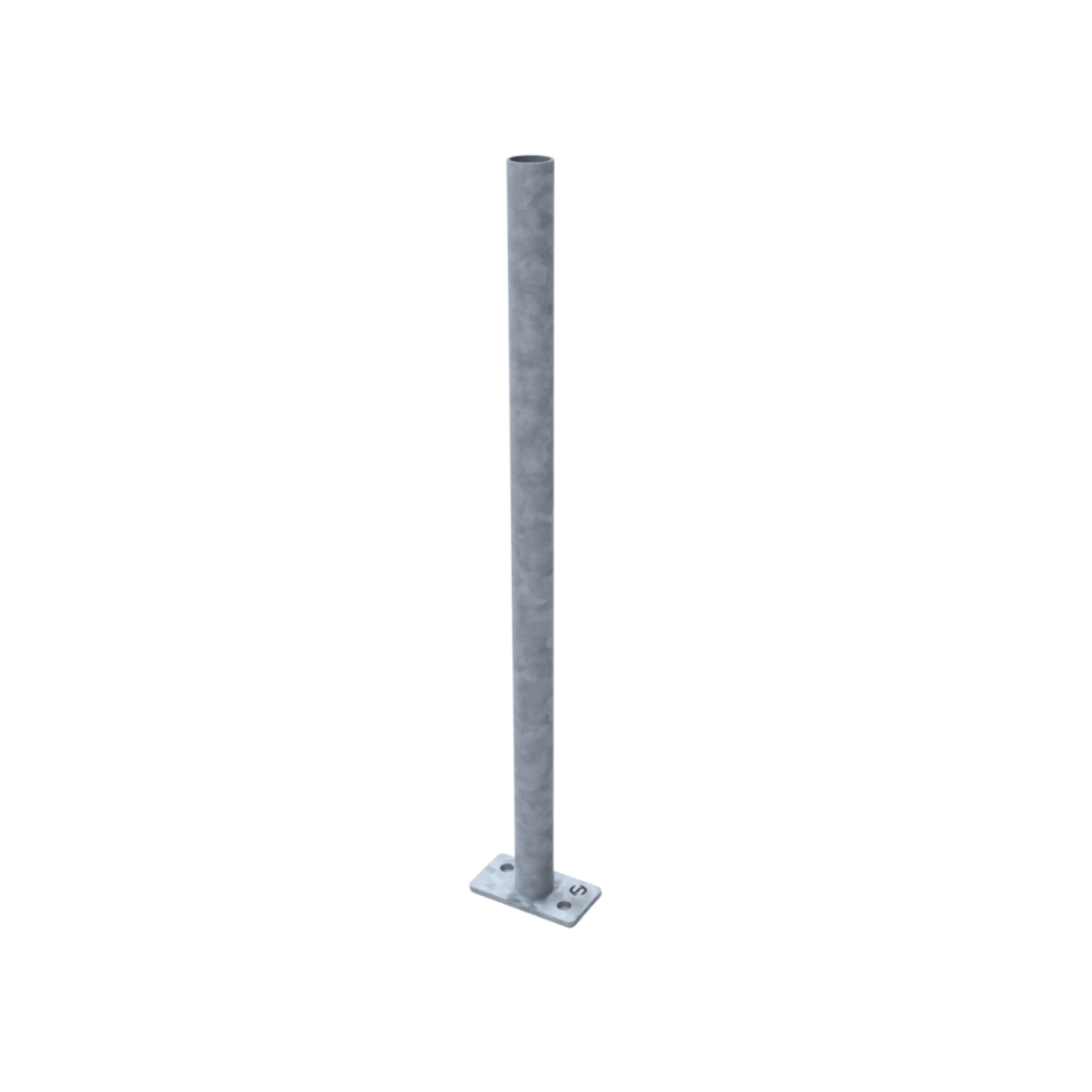
Baseplates and stanchion posts are the foundation. Posts fix to the floor via welded flat baseplates or core-drilled anchors, depending on your floor construction and whether the installation is permanent.
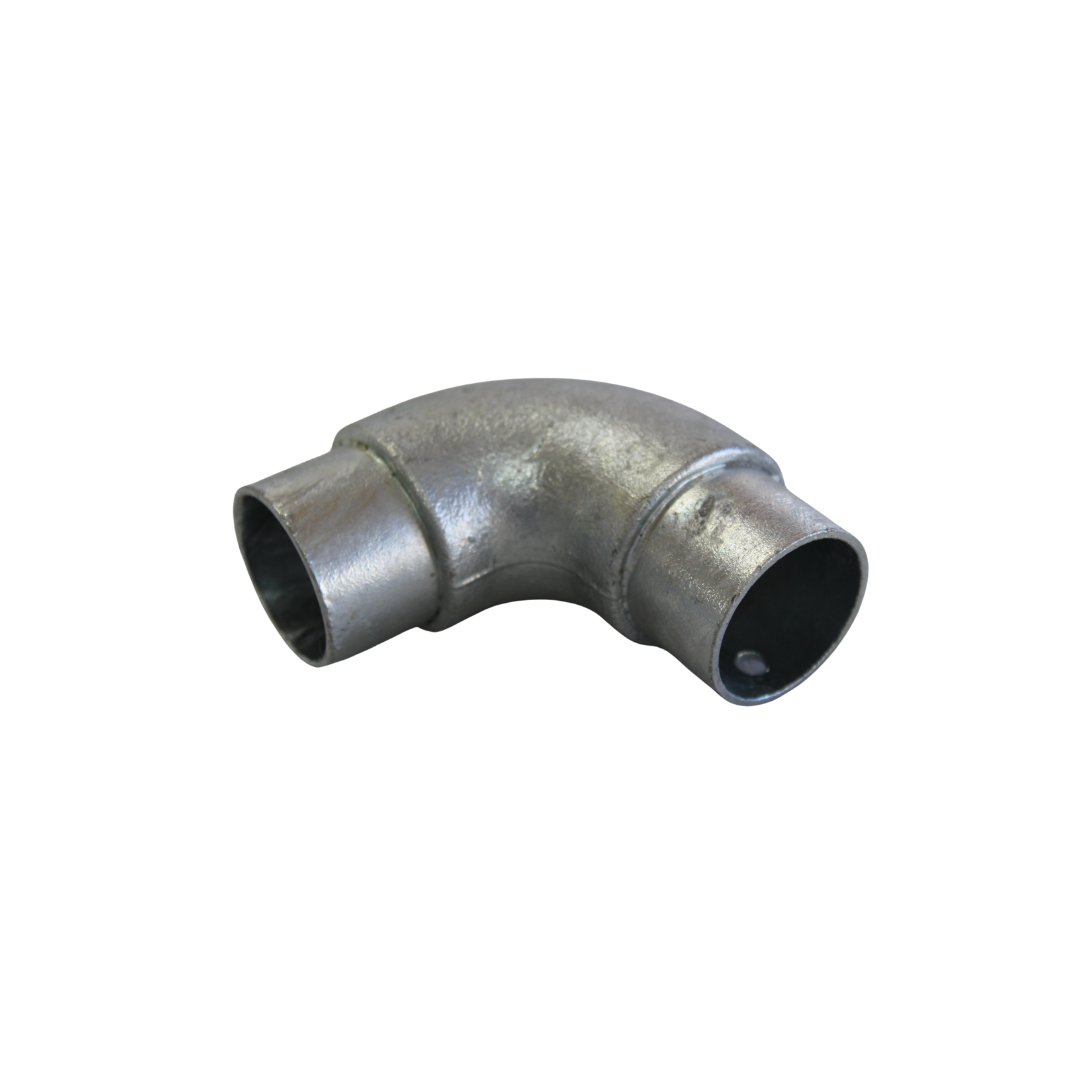
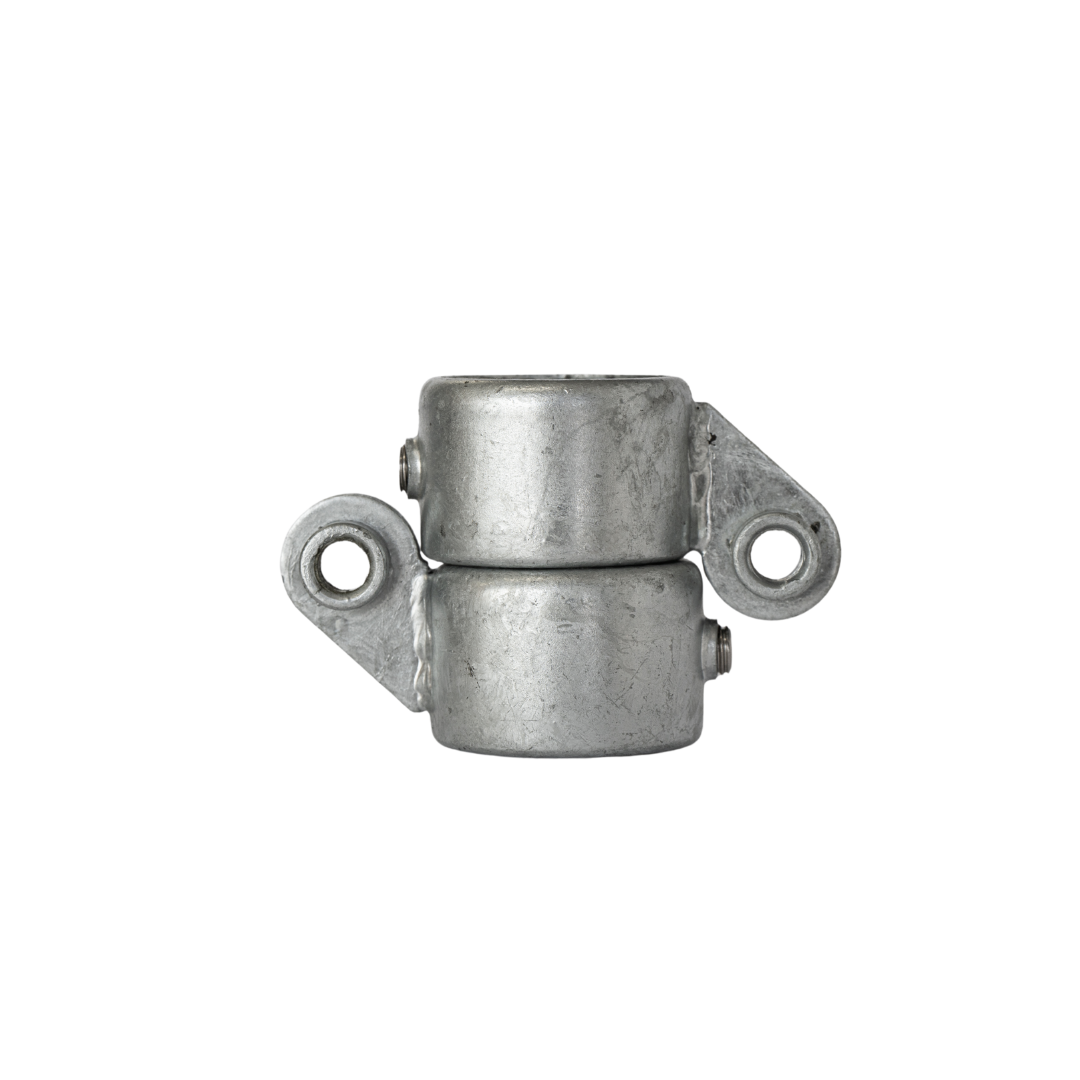
Pipe joiners and elbows let the rail change direction cleanly around corners, internal angles and structural columns. 90-degree elbows, T-joiners and in-line connectors all have a role depending on your layout.
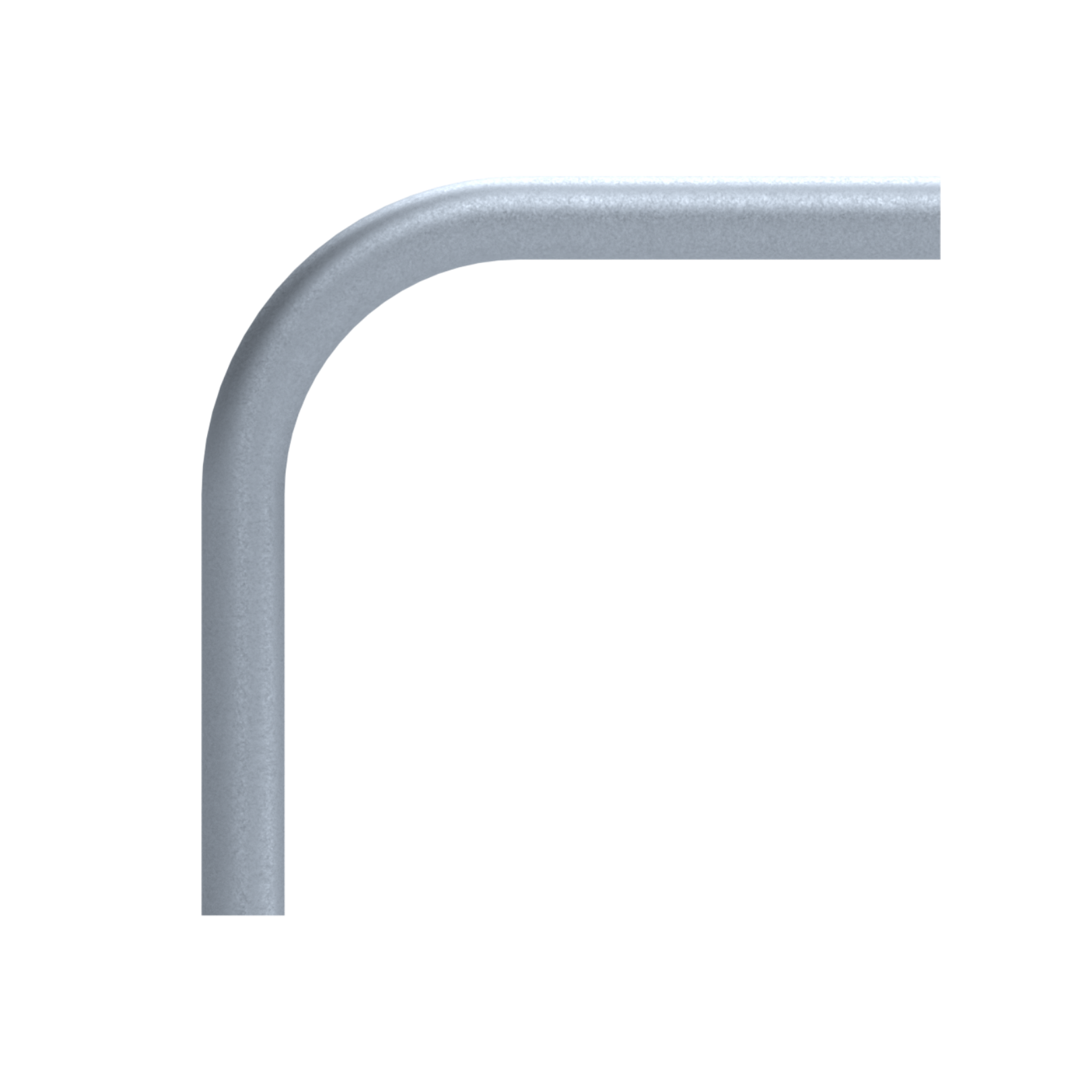
Pipe and rail bends are used on stairways where the handrail follows a slope. They allow a continuous, compliant rail along the full staircase length.
Mid-rail connection components (clamps, split rings, two-way connectors) hold the knee rail at the right height between stanchions.
Kickplates sit at the base of the rail to stop objects rolling off the platform edge.
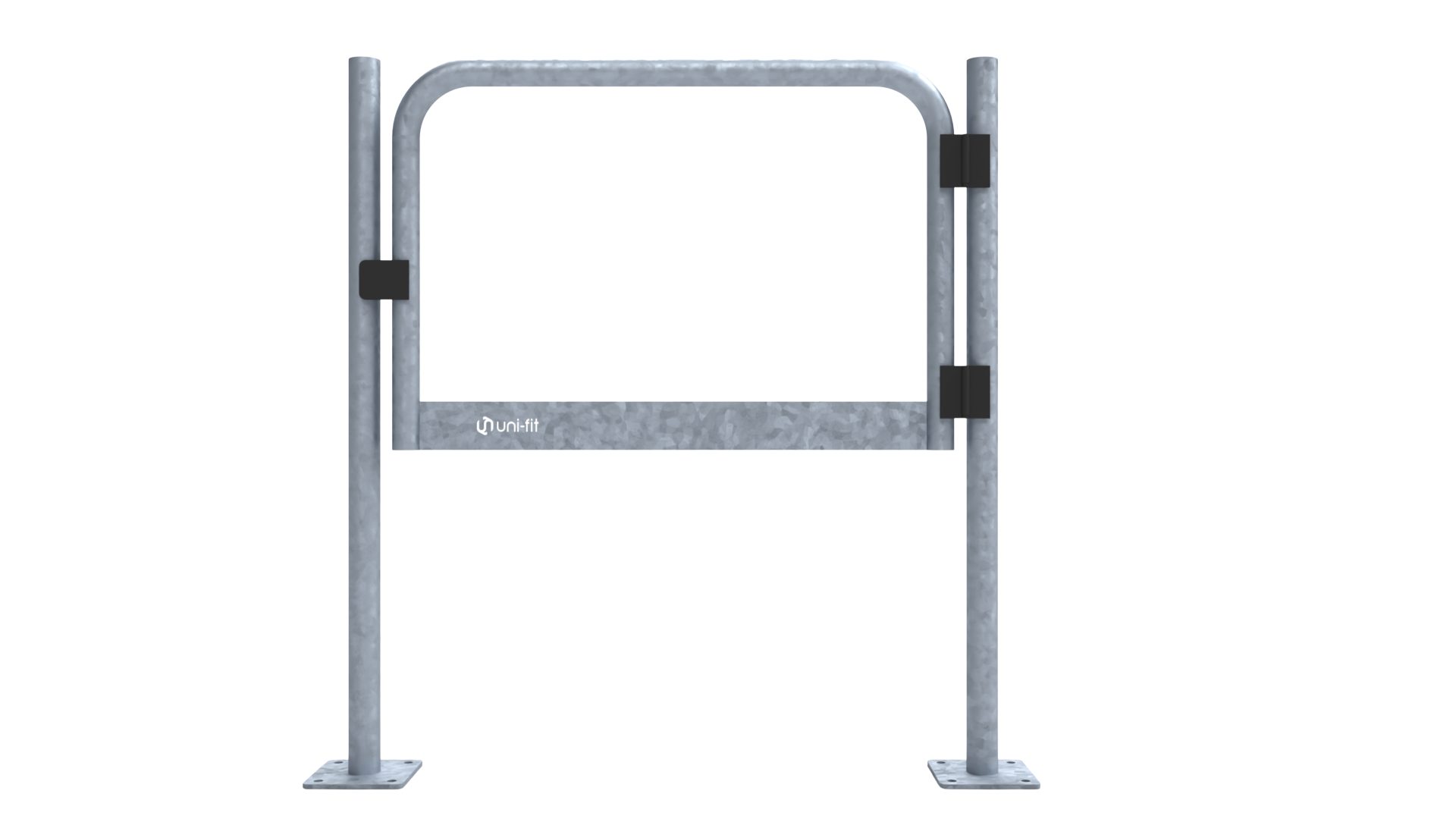
Safety gates control access at pallet drop zones, lift openings and stairway entries. Gates need to be self-closing and, at pallet openings, designed so both sides can’t be open at the same time.
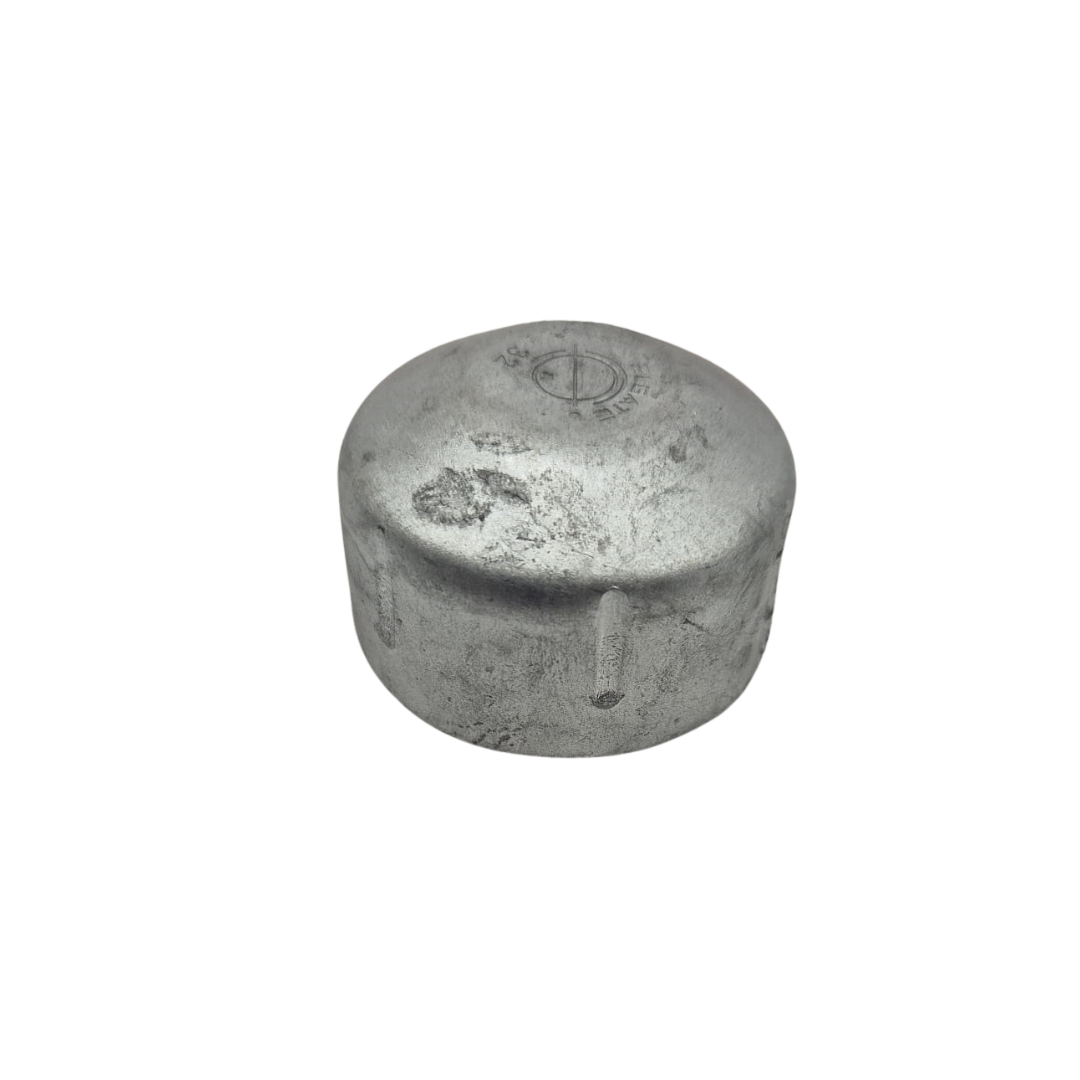
End caps finish off exposed pipe ends. It’s a small detail but it removes a sharp edge and gives the installation a clean finish.
Compliance checklist
Use this as a starting point before any inspection or new installation:
- Handrails installed on all exposed edges with a drop over 300mm
- Top rail height between 900mm and 1100mm throughout
- Mid rail at minimum 560mm from floor
- Toe boards at minimum 100mm high at all platform edges
- Handrail grip diameter between 30mm and 65mm
- Continuous balustrading on all stairways
- Compliant self-closing gate at any pallet drop or access opening
- All posts fixed to structural substrate with appropriate anchors
- Material choice suited to the environment
Specifying your system
Uni-Fit’s modular handrail system is built for industrial and commercial mezzanine applications. Every component is hot-dip galvanised steel, engineered to AS 1657, and designed so that installation doesn’t require fabrication or welding on site.
If you’re specifying a new build, upgrading an existing installation or sourcing replacement components, the Uni-Fit range covers the full system from baseplates to safety gates.
View the Uni-Fit product range | Download the product catalogue | Find a stockist near you
Got a question about your specific site? Get in touch with the team at sales@uni-fit.com.au or call 1800 868 544.